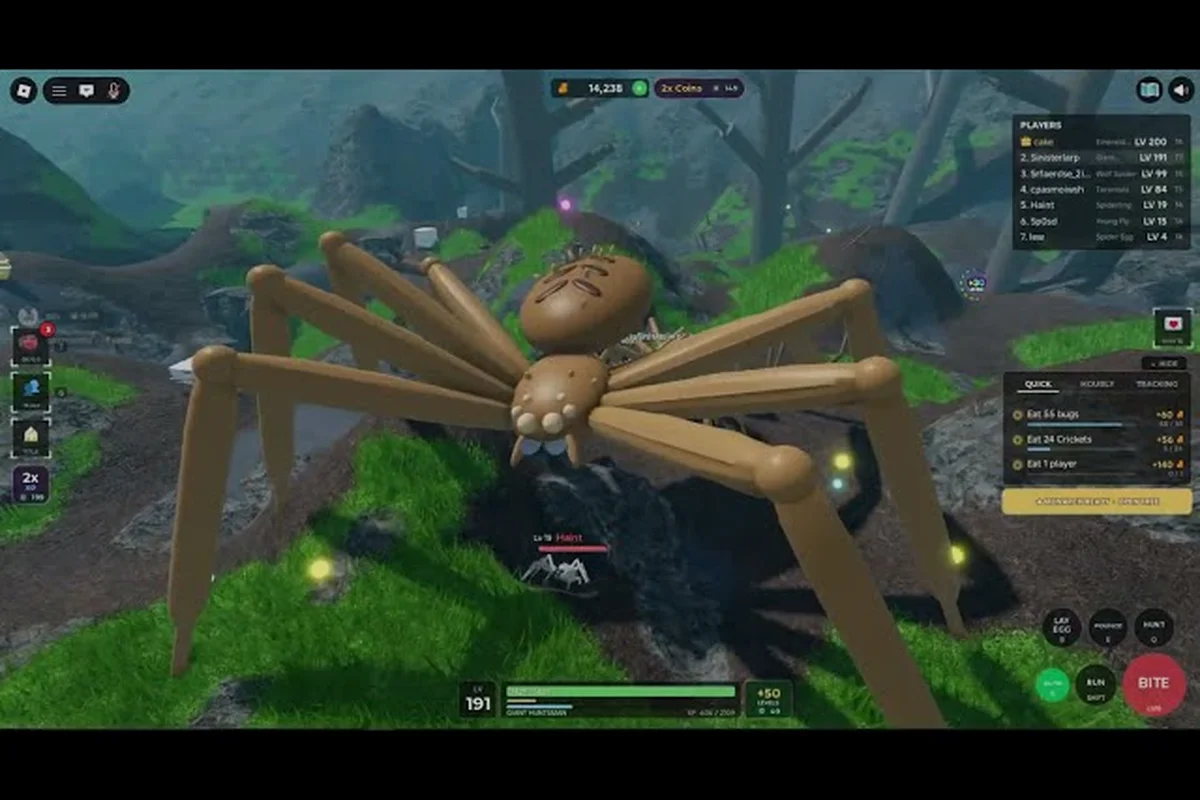
The bug evolution red and white spider matters because it sits at a key branching point where growth, combat stats, and Bug Tree positioning begin to shape your build. Learn how it compares with nearby spiders, giant insects, and the prehistoric forms at the end of the tree.
Bug Evolution Red and White Spider Overview
The red-and-white spider is an intermediate evolution in Bug Evolution, usually reached around level 20 in the spider branch. It occupies an important midpoint between the basic Spider at level 10 and the white-fluffy spider at level 30, so unlocking it gives players a meaningful upgrade without requiring the deepest tiers of the Bug Tree.
Understanding this form helps because choosing an evolution path can determine which insects remain available later. The red-and-white spider also serves as a practical comparison point for players evaluating the bug evolution best spider options, since it combines a recognizable spider silhouette with stronger progression than the starter form.
| Evolution milestone | Named form | Position in the spider branch | Confirmed information |
|---|---|---|---|
| Level 1 | Housefly | Opening form | Weakest practical baseline |
| Level 10 | Spider | First spider form | Basic spider branch option |
| Level 20 | Red-and-white spider | Mid-branch evolution | The form discussed here |
| Level 30 | White-fluffy spider | Deeper spider evolution | Later milestone shown in the interface |
| Deep branch | Tarantula | Below the prehistoric tier | Community strong-spider candidate |
| Deep branch | Black Widow | T3 branch choice | High-bite reputation, unverified exact stats |
Players should not interpret the milestone alone as a complete stat listing. Bug Evolution uses the same five categories for every insect: Speed, Health, Bite Damage, Bite Speed, and Stamina. Those values increase as you eat, level up, and spend coins on upgrades, but the developers have not published a full numerical chart for the red-and-white spider.
What makes the form distinctive
The red-and-white color pattern makes this insect easy to recognize, but appearance alone does not establish official rarity. Bug Evolution organizes insects by Bug Tree tier and premium tabs rather than labels such as Common, Rare, or Legendary. As a result, the form is often discussed among the bug evolution rare insects, yet that wording should be treated as a community description rather than an official rarity grade.
Its practical distinction comes from progression value. It becomes available before the deeper spider options, giving new players a clear milestone while preserving meaningful decisions about what follows. A more detailed catalog of Bug Evolution insects can help place it beside the Housefly, Moth, Grasshopper, Locust, and other named forms.
Abilities, Stats, and Evolution Requirements
The red-and-white spider does not have a separately documented ability set in the available game information. Instead, its performance comes from the standard five-stat framework. A form can excel through faster movement, stronger health, more damaging bites, quicker bite speed, or greater stamina, but the exact balance of the red-and-white spider remains unverified.
| Stat | What it controls | Why it matters for the red-and-white spider |
|---|---|---|
| Speed | Movement speed | Helps you reach food and avoid attackers |
| Health | Damage taken | Provides room for mistakes during crowded fights |
| Bite Damage | Damage per bite | Influences combat efficiency |
| Bite Speed | Bite frequency | Affects how quickly attacks can be repeated |
| Stamina | Sprinting or activity endurance | Controls how long aggressive movement can be sustained |
Community footage shows the central progression loop clearly. In Bax’s community gameplay of becoming the strongest spider, the player eats to reach higher levels, selects a spider-branch evolution on the Bug Tree, competes with other players, and works toward the strongest-insect goal in a 15-player lobby. That behavior supports the importance of reaching milestones early instead of treating the Bug Tree as a menu visited only after combat.
Reaching level 20 efficiently
The practical requirement is to reach level 20 and select the red-and-white spider when its node becomes available. Players can speed up early progress by identifying several food sources in a short route, because Bug Evolution distributes consumables around a grassy open map. Eating nearby items immediately usually prevents the character from wandering while carrying a partial progression bar.
A clear progression routine involves three stages:
-
Begin with the Housefly: Learn where food appears without expecting a spider to win direct encounters.
-
Reach level 10: Follow the first spider branch and use the basic Spider as a bridge form.
-
Reach level 20: Unlock the red-and-white spider, then inspect its five bars before choosing the next branch.
Players comparing milestone timing can use the Bug Evolution evolution-order overview to connect leveling priorities with Bug Tree decisions. The useful goal is not merely hitting level 20; it is arriving with enough health and stamina to contest the food that other players are also targeting.
Bug Evolution Red and White Spider Compared With Other Forms
The red-and-white spider occupies a useful middle position rather than a confirmed endgame slot. It is stronger than the basic Spider in the intended progression line, but it remains below forms positioned deeper in the Bug Tree. Exact tier placement should be handled cautiously because official numerical stats and rarity grades are unavailable.
| Comparison | Red-and-white spider advantage | Red-and-white spider limitation |
|---|---|---|
| Versus Housefly | Spider form, better progression milestone | Still weaker than deeper forms |
| Versus basic Spider | Reached at level 20 instead of level 10 | Requires more feeding and map control |
| Versus Tarantula | Earlier accessibility and simpler route | Tarantula has greater late-game reputation |
| Versus Black Widow | Shares the broad spider category | Black Widow is associated with stronger bite damage |
| Versus Locust | Maintains the spider build | Loses the flying or hopper-style branch |
| Versus giant insects | More accessible than late prehistoric forms | May lack the size and damage of top forms |
The Tarantula is a frequent community answer when players search for the bug evolution best spider, partly because its deeper tree position suggests greater combat potential. However, “best” depends on the encounter. A player with low health may value the red-and-white spider’s earlier access, while a player able to sustain late-game fights may prefer the Tarantula or Black Widow route.
The bug evolution giant insects include forms near the prehistoric end of the progression tree. Their larger scale does not come with published stat totals, so visual size should not be treated as proof of a particular advantage. In practical terms, size may influence visibility and hit perception, while the five stat bars determine movement and combat performance more directly.
Comparing the major branches
The first major decision appears at T3, where the available direction splits between Locust and Black Widow. Choosing Locust moves the build toward flying or hopper-style insects, while Black Widow preserves a spider-oriented path. That choice affects the remainder of the run, making it more consequential than the cosmetic red-and-white appearance.
A broader Bug Evolution insect tier list can help evaluate community-inferred rankings, but those positions should not be presented as official balance data. The game groups insects by tree tier and premium tabs, so any “strongest” list is based on player experience rather than a developer-issued rarity chart.
Rare, Hidden, and Prehistoric Bug Evolution Insects
The red-and-white spider is frequently treated as one of the bug evolution rare insects, but Bug Evolution does not assign formal rarity labels. Its significance comes from being a named, milestone-based form on the visible spider branch. This distinction matters because a community tier list can call a form rare while the official interface presents it by level and tree position.
The deeper Bug Tree contains several locked rows marked with question marks around tiers T4 through T6. Those entries create interest in the bug evolution secret insects and bug evolution hidden insects, but a hidden icon alone does not reveal the final insect’s name, appearance, or requirements.
| Inspected feature | Confirmed detail | Safe conclusion |
|---|---|---|
| Bug Tree nodes | Named and unknown forms appear by tier | Deeper forms require level and node access |
| T4–T6 markers | Several rows display question marks | Contents are not publicly verified |
| Premium spider tab | A Robux Spiders section appears in the interface | Exact roster and pricing remain undisclosed |
| Prehistoric entries | Prehistoric creatures appear near the tree’s end | Their practical stats have not been published |
| Rarity labels | No Common, Rare, or Legendary grades are shown | “Rare” is community terminology |
The bug evolution prehistoric beast is better understood as a group of late progression forms rather than one confirmed creature. Community descriptions include giant insects and prehistoric-inspired beasts, but exact names beyond the confirmed roster should be treated cautiously. Players should rely on the visible Bug Tree and update notices instead of assuming that every silhouette in promotional footage has a final release date.
A practical verification checklist
Before labeling an insect hidden or secret, check whether the feature is visible in the current Bug Tree, whether a level requirement is attached to its node, and whether the server version matches the footage being compared. Early access and development updates can change branches, premium menus, or milestone placement.
Players exploring for unusual forms can also consult the Bug Evolution strongest-insect location guide to improve food access and map navigation. Searching is less efficient than following a consistent route because each server contains other players, and competition often determines whether a player collects enough food to reach the next unlock.
Best Strategy for Using the Red-and-White Spider Build
The strongest approach to this form is to treat level 20 as a platform rather than a destination. Players should build around the stat category that is strongest in their current session, preserve enough stamina to escape crowded areas, and decide whether the next branch should remain a spider build or move toward Locust.
| Priority | Practical objective | Reason |
|---|---|---|
| Early game | Collect food consistently | Levels unlock the Bug Tree options |
| Level 10 | Enter the spider branch | Establishes the build before deeper tiers |
| Level 20 | Select the red-and-white spider | Reaches the target milestone without skipping the line |
| Combat | Avoid low-health fights | Keeps progress safe until better forms unlock |
| Branch planning | Compare Locust and Black Widow | Changes the available late-game path |
| Late game | Test the chosen form in real encounters | Community rankings do not replace actual performance |
A good route begins with Housefly food gathering, continues through the Spider milestone, and reaches the Level 20 red-and-white spider before attempting a risky upgrade. Players should collect smaller or safer food when outnumbered, then use short movement bursts to contest better sources. Because Stamina governs sustained activity, chasing every visible item can leave the character vulnerable when a stronger insect arrives.
The basic Spider can also serve as a temporary farming form. Staying on that tier for a few levels may produce safer food collection than pushing toward the red-and-white spider with incomplete upgrades. This is especially valuable in a 15-player lobby, where the strongest player may be actively guarding a productive food patch.
Choosing the next evolution
At T3, players must weigh consistency against specialization. Locust offers a different movement identity and can lead toward flying or hopper-style insects, while Black Widow continues the spider route and carries a community reputation for strong bite damage. Neither choice has a published numerical advantage, so players should consider their current bars, available resources, and comfort with close-range combat.
The bug evolution best spider is therefore not a single universal answer. The red-and-white spider is valuable for progression and accessibility, the Tarantula represents a deeper option, and Black Widow may reward players who prefer aggressive biting. For detailed size and form comparisons, the Bug Evolution insect-size reference provides useful context without replacing live stat checks.
Frequently Asked Questions
Is the red-and-white spider officially rare in Bug Evolution?
Not by a formal rarity label. Bug Evolution does not display Common, Rare, or Legendary grades; it organizes insects by Bug Tree tier and premium sections. Players often describe the red-and-white spider as one of the bug evolution rare insects because it is a distinctive named form at level 20, but its official classification is milestone-based rather than rarity-based.
How do players unlock the red-and-white spider?
Reach level 20, then select the corresponding node on the spider branch of the Bug Tree. The route normally begins with the Housefly, continues to the Spider at level 10, and reaches the red-and-white spider at level 20. Consistently collecting food on the map is the main way to gain levels quickly.
Is the red-and-white spider stronger than the Tarantula?
The available evidence does not support a firm numerical answer. The red-and-white spider is reached earlier, while the Tarantula occupies a deeper position below the prehistoric tier. Community discussions often favor the Tarantula in late-game strength, but its exact stats are unpublished, so direct comparisons should be verified through the five in-game stat bars.
What are the strongest spiders in Bug Evolution?
Community discussion frequently names the Tarantula and Black Widow as leading spider choices, while the red-and-white spider remains a useful mid-branch build. There is no official ranked list, and exact performance depends on stats, upgrades, enemies, and server conditions. The insect tier list reflects community-inferred rankings rather than developer balance data.
Can players find secret insects in Bug Evolution?
Several deep Bug Tree rows display question-mark nodes around tiers T4 through T6, which may indicate secret or hidden forms. Their final identities and requirements are not fully verified. Players should treat videos and community discoveries as provisional, then compare them with the current in-game tree before assigning a name to an unknown creature.