Bug Evolution where are the strongest insects spawn is simpler to answer than it sounds: the best hunting grounds are where food concentrates around major landmarks. Start in the grass fields, watch the hill and castle approaches, then push into the desert as your insect grows.
Bug Evolution Strongest Insect Spawn Locations
Bug Evolution where do insects spawn? The current map revolves around a compact open world with grass fields, an open field, hills, a stone castle, and a desert region. Insects occupy areas where food is available, while the most valuable hunting routes connect multiple resource zones instead of keeping you in one small clearing.
The strongest creatures are not necessarily tied to a single rare point. Spawns refresh as food appears, and a player can improve its chances by moving continuously and checking several connected hunting grounds. That makes location knowledge more valuable than memorizing a single coordinate.
| Map area | Available food | Early-game safety | Strong-hunt value |
|---|---|---|---|
| Grass fields | Dense starter food | High | Medium |
| Open field | Scattered food | Medium | Medium |
| Hills | Mixed food beyond the field edge | Medium | High |
| Stone castle | Mid-tier food around the approach | Medium | High |
| Desert | Region-specific food | Low to medium | High, but riskier |
This ranking describes gathering efficiency, not a confirmed ranking of insects inside each biome. Since Bug Evolution is a new 2026 Roblox release and its live population changes quickly, spawn behavior should be treated as a current community observation rather than a permanent developer guarantee.
Best Starting Points Near the Grass Fields
The starter grass fields are the safest answer when players search for the best place to begin. Small food is densest there, so a newly hatched spider can learn the eating and growth loop without crossing the entire map. The same area also serves as a respawn point after defeat, making it convenient for repeated early attempts.
A practical route is to eat continuously, turn toward the open field, and watch for prey crossing from one zone into another. Food at the transition is often more valuable than food deep inside the starting area because it attracts insects that have already grown beyond the starter stage.
Dense-Food Crossings Worth Watching
Strong players treat feeding corridors as hunting locations. A corridor is where one food source ends and another begins, such as the boundary between the grass fields and hills or the approach leading toward the stone castle. These crossings can concentrate several insects without requiring a dangerous journey into the desert.
Use a wide view before committing to a corridor. If a large insect is already feeding, wait for another target to approach rather than beginning a fight with superior size. If the corridor becomes empty, rotate toward the castle or another productive edge instead of spending stamina searching randomly.
For a broader breakdown of routes, the Bug Evolution map guide explains where food, respawning, and landmark travel fit into the open world. Use that guide to compare food density with respawn timing along the grass fields, hills, and stone castle routes; a feeding corridor is more reliable when it links two food patches, while landmark paths can restore opportunities after nearby insects are harvested or respawn on a predictable cycle.
Bug Evolution Rare Insect Hunting Areas
Players often ask where to find rare insects. The most reliable answer is to combine a high-value region with a route that lets you observe multiple insects before engaging. The stone castle and the hills generally offer better mid-game targets than the starter fields, while the desert offers greater danger for players ready to take on stronger creatures.
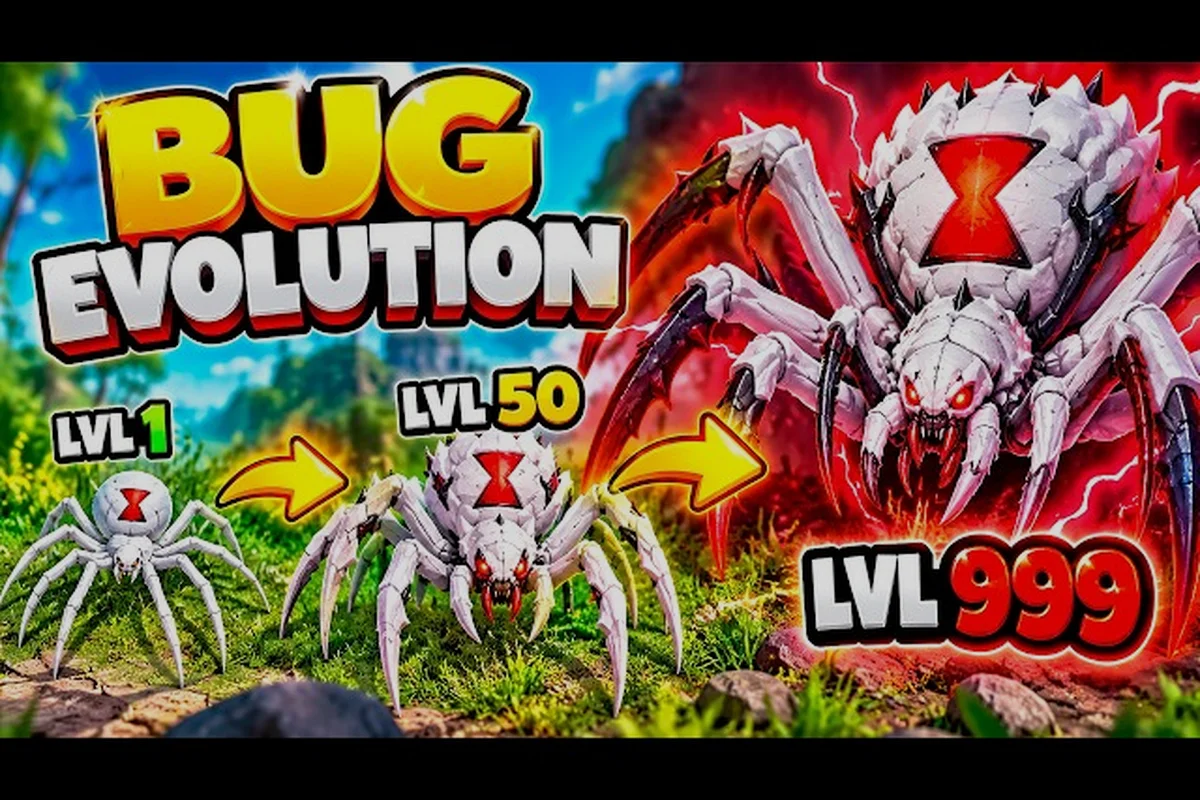
Rare spawns should not be confused with the stronger insect forms later available through progression. Bug Evolution lets players unlock 30-plus insect forms during a session, including houseflies, moths, tarantulas, black widows, and giant prehistoric creatures. A location may therefore contain ordinary wildlife even when the player can evolve into a formidable spider elsewhere.
| Priority | Target area | Why players visit | Recommended player stage |
|---|---|---|---|
| 1 | Castle approach | Mid-tier feeding area near a useful landmark | Early to mid game |
| 2 | Field-to-hill edge | Combines two food zones and supports ambushes | Mid game |
| 3 | Open field | Reliable rotation with nearby landmarks | Early to mid game |
| 4 | Desert | Higher-risk hunting and future boss content | Later game |
| 5 | Starter grass | Dense food, safest learning and respawn area | New players |
Stone Castle as a Mid-Game Anchor
The stone castle is the clearest landmark for players who want to orient themselves without a full map overlay. Food around its approach is described as mid-tier, which makes the castle a practical destination after the starter fields. Its stone structures also provide visual separation from the open grass, helping teams identify their route across the map.
Approach from the field side and scan the perimeter instead of rushing through the center. Larger insects may patrol routes around the structure, while smaller food can remain near the outer edges. A safe observation circuit around the castle can reveal activity without committing the spider’s stamina to a long chase.
Desert Routes for Experienced Hunters
The desert region is a strong choice for later hunters because it separates valuable targets from the safe starter zone. It also introduces environmental risk: an injured insect has fewer convenient escape routes, and larger enemies may control more valuable feeding areas. The current desert also supports the planned Desert Sand Worm boss content associated with the November 9 update, although its post-update behavior is not yet verified.
Because the game is still developing, players should not assume that one desert route permanently holds the best species. Test the edges first, compare food density with castle activity, and keep enough stamina to return toward more populated ground if the route becomes too dangerous.
Bug Evolution Best Spawn Location by Player Stage
There is no single universal location because a powerful insect is dangerous for a starter spider but ideal for a player with stronger statistics. The starter grass fields remain the best spawn location for learning, the hills suit players seeking a balance of food and risk, and the castle approach offers a dependable mid-game destination. Experienced hunters can test the desert for tougher targets.
The HUD helps make these location choices more precise. Players can monitor Speed, Health, Bite Damage, Bite Speed, and Stamina alongside the current insect name, level, gold, collected Bugs, and Bug Tree options. A route becomes dangerous when the enemy can outpace you, survive your attacks, or force a long retreat that drains Stamina.
| Player situation | Recommended location | Main reason | Primary caution |
|---|---|---|---|
| First session | Grass fields | Dense beginner food | Avoid chasing larger insects |
| After several evolutions | Open field | More active prey without maximum risk | Watch for cross-zone predators |
| Mid-game growth | Hills | Dense-food transition zone | Keep a retreat toward the fields |
| High-level hunting | Castle approach | Mid-tier food and useful orientation | Check around the full perimeter |
| Late-game risk taking | Desert | Stronger hunting opportunities | Preserve stamina for escape |
Match the Route to Your Statistics
A strong insect is not useful if it cannot help you feed. Compare your current insect’s Bite Damage and Bite Speed with the target’s Health, then decide whether repeated attacks can win before stamina becomes a problem. Speed matters during the approach, but it cannot compensate for choosing a route with no nearby food.
Players who want a more numerical comparison can use the Bug Evolution insect tier list to distinguish competitive forms from the location that produces them. The two systems serve different purposes: the tier list evaluates potential, while the map determines which targets you can actually reach safely.
Bug Evolution Exploring the Map Route
Bug Evolution exploring the map works best as a loop rather than a straight trip. Start in the grass fields, circle through the open field, test the hill edge, reach the castle, and then assess whether the insect has enough health and stamina to continue toward the desert. This route gathers food while revealing where other players are active.
The map is compact enough that a player can cross major regions in roughly one or two minutes of scuttling, according to community experience. No official dimensions have been published, so treat that estimate as a practical observation rather than a fixed measurement.
| Route order | Distance role | Food value | Risk level | Best use |
|---|---|---|---|---|
| 1 | Grass fields | Starter food | Low | Build early size |
| 2 | Open field | Scattered to moderate | Medium | Find active prey |
| 3 | Hill boundary | Mixed feeding zone | Medium to high | Target mid-game insects |
| 4 | Castle approach | Mid-tier food | Medium | Reorient and regroup |
| 5 | Desert edge | Region-specific food | High | Hunt when prepared |
A Five-Stop Exploration Loop
Begin by eating in the grass until the insect can handle common prey. Move into the open field and search for food rather than players, because every successful meal supports the next evolution. At the hill transition, pause where two zones meet and identify which direction offers the safest retreat.
Continue toward the castle as a natural midpoint, then circle its perimeter to check for larger targets. Only push farther toward the desert if the current insect’s health, damage, and stamina remain strong. This route turns map exploration into a measurable progression loop instead of a random search.
The Bug Evolution map size guide adds context on travel time, respawning, and farming considerations, which are especially useful when comparing an efficient rotation with a longer expedition. Because insect size determines available prey and the distance needed to find food, a short route centered on grass, open field, and the hill transition can produce more reliable upgrades than rushing toward the desert. Use spawn density, respawn timing, and the map’s zone boundaries to decide whether staying near the castle is more valuable than extending the expedition, especially when searching for rare insects and stronger evolution targets.
Bug Evolution Insect Spawn Locations and Tactics
The best hunting tactic is to preserve the ability to choose between several targets. Move toward a busy crossing, watch from a slight distance, and attack only when the target is already feeding or isolated. A chase across open ground gives stronger insects more chances to counterattack and can separate a player from useful food.
Players should also rotate after a defeat. Since the grass-field starter area acts as a respawn point, returning there is the fastest way to rebuild size. Do not immediately run back to the location that caused the defeat; first eat, compare the enemy’s behavior, and select a less crowded route.
| Tactic | Why it works | Best location | Failure signal |
|---|---|---|---|
| Edge feeding | Targets become less alert while occupied | Hill and field crossings | Multiple predators arrive |
| Castle circuit | Landmark creates a repeatable loop | Castle approach | Enemies control one full side |
| Desert peek | Tests danger without full commitment | Desert edge | Stamina drops too early |
| Early reset | Rebuilds size and restores options | Grass fields | Enemy remains stronger afterward |
Watch the Food, Not Just the Enemy
The strongest insect nearby is not automatically the strongest insect you can defeat. A smaller target may offer better food, lower risk, and a shorter route to evolution. Observe several insects and compare their level, approach behavior, and access to food before choosing.
Food density is the core measurement during exploration. If a distant region has a dramatic insect but little visible food, the hunt may end without enough growth. A busy corridor with moderate-sized prey can produce better results because each meal keeps the player moving toward the next stage.
Team Positioning Around the Castle
The stone castle is especially useful for teams because it provides a recognizable center point. One player can approach from the field while another watches from a different side, reducing the chance of walking into a large predator unprepared. Neither player should occupy the same narrow approach, because that turns a scouting advantage into an avoidable fight.
Mark the safest feeding side, rotate every few minutes, and leave before health drops. For example, if one player feeds near the castle while the other scouts the opposite field, the team can compare spawn routes without taking a risky pursuit. Rotating feeding positions also prevents insects from clustering, while timing each rotation around spawn activity gives teams more opportunities to track mid-tier insects than chasing the first large target they see.
Rare Insects, Cave Updates, and Future Changes
The current map includes grass fields, open field, hills, a stone castle, and a desert. There is no underground cave in the live open build as of late October 2026. An underground cave is announced for November 19, so it should be described as upcoming rather than included in current spawn recommendations.
The Desert Sand Worm is associated with a planned November 9 update. Players may expect the desert to become more important when boss content arrives, but exact spawn rates, rewards, and behavior are not confirmed. This distinction matters because a boss preview should not be presented as a currently verified event.
| Feature | Current status | Practical meaning for hunters |
|---|---|---|
| Grass fields | Available | Safest early food source |
| Stone castle | Available | Mid-game orientation point |
| Desert | Available | Riskier current hunting region |
| Desert Sand Worm | Scheduled for November 9 update | Future desert focus |
| Underground cave | Scheduled for November 19 | Not a current spawn location |
| Full map overlay | Not shown | Use landmarks such as the castle |
What Community Reports Can Confirm
According to community reports, the starter grass fields contain the densest beginning food, the castle approach provides mid-tier feeding opportunities, and the strongest current hunting areas are dense-food crossings. These reports also suggest that the map supports quick movement between regions, but they do not establish a permanent ranking of every insect.
Because Bug Evolution is a new 2026 Roblox title with rapidly changing population and development, spawn density may shift after updates. The current game listing had more than 3.9 million visits, around 20.8 thousand active players, and 15 players per server in late October 2026, although those figures change continuously.
Preparing for New Spawn Areas
When the cave arrives, treat it as a new hunting layer rather than an automatic best location. Early footage or player reports may reveal dense food, stronger insects, or a difficult layout, but those observations should be tested once the update is live. Players should compare the cave against the castle and desert rather than assuming new content automatically replaces the established routes.
A balanced team can prepare by keeping one player near the current grass and field route while another checks the new entrance. This setup preserves a reliable food source and allows the cave to be tested gradually for stronger insects or a better spawn route. For example, the field player can maintain progress on the familiar route while the scout spends a short interval inside the cave, checking spawn density, enemy difficulty, and whether the layout offers safer access to rare insects. If the cave proves dangerous or inconsistent, the team can retreat without abandoning its established hunting area; if it is stronger, the scout can map a controlled path before the group commits.
Frequently Asked Questions
Where are the strongest insects in Bug Evolution?
The strongest current hunting opportunities are around the hills, stone castle approach, and desert edge because these areas provide better mid-tier or region-specific food. However, insect strength varies by player level, and a dangerous target near the castle may still be weaker than a desert insect. Compare levels and watch behavior before committing.
Where should a new player spawn and hunt?
Start in the grass fields beside the starter area because small food is densest there and the location also serves as a respawn point. Eat until the insect reaches a comfortable size, then rotate toward the open field. Avoid chasing larger insects during the first minutes unless the target is already low on health.
Does Bug Evolution have an underground cave with rare insects?
The underground cave is an announced map feature scheduled for November 19, 2026, and it is not available in the current open build as of late October. Rare insects there remain unconfirmed until players can test the update. Until then, the grass fields, hill crossings, castle approach, and desert provide the most practical hunting grounds.
Are strong insects guaranteed to spawn at the castle?
No location guarantees a particular insect on every visit because food availability and player activity influence spawns. The castle approach is valuable because it combines mid-tier food with a recognizable route around a major landmark. Check multiple sides, observe feeding insects, and avoid attacking when several strong targets gather nearby.
Is the desert better than the castle for finding rare insects?
The desert can offer higher-risk hunting and may become more important after the Desert Sand Worm update, while the castle remains a more dependable mid-game route. Test the desert edge with a healthy insect and adequate stamina. If encounters become constant or food is scarce, rotate back toward the castle or the field-hill crossing.