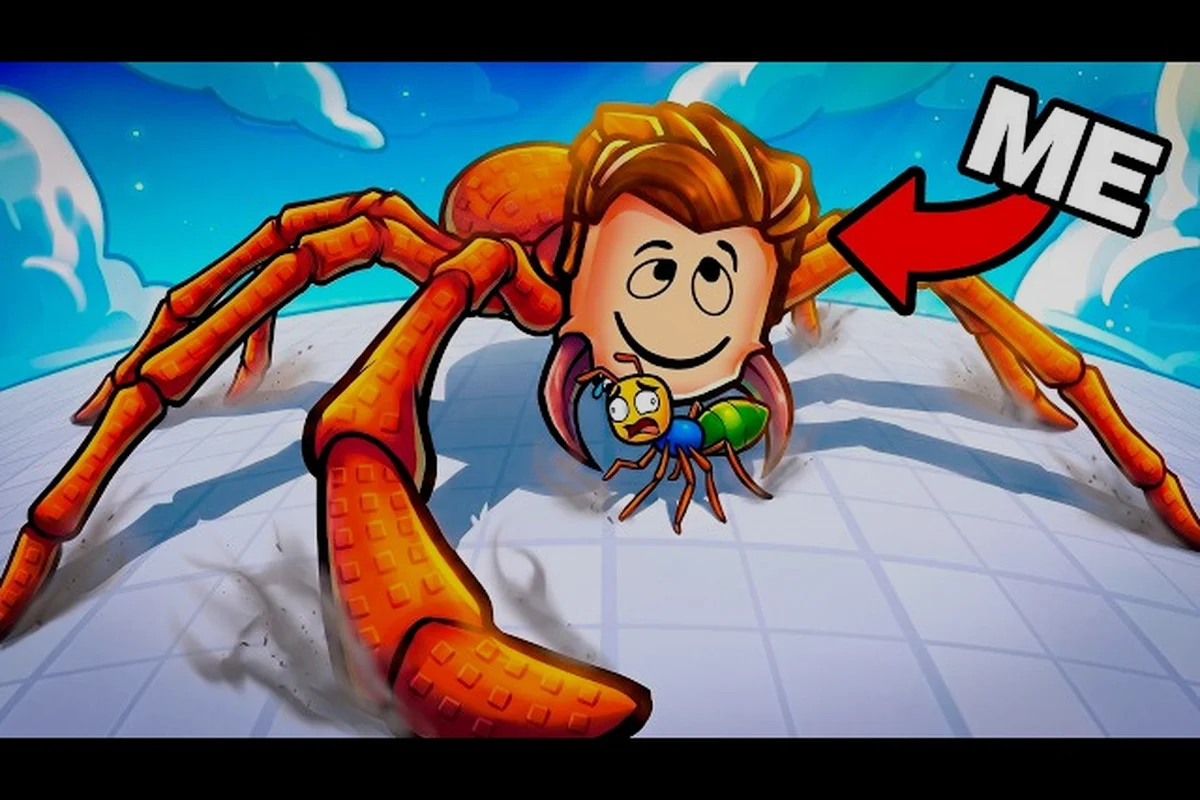
In Bug Evolution: Survival of the Fittest, combat positioning, stamina management, and target selection determine whether an insect survives long enough to grow. Rather than forcing a fight with a stronger insect, use terrain and movement to conserve stamina, then damage vulnerable targets when the opening is safe; for example, attacking a lower-tier insect can preserve resources for a later PvP encounter. Smart escapes matter because chasing an unfavorable match can cost health and reduce your chance of winning safer fights.
Survival of the Fittest Combat Foundations
Bug Evolution is a bite-based survival game where health, stamina, speed, and bite speed determine whether you win a confrontation. The core of bug evolution survival of the fittest is simple: avoid unfavorable fights, preserve enough stamina to leave danger, and make every bite count. Players face other insects and other players on shared servers containing about 15 participants, so a dangerous encounter can appear without warning.
Read the Five Combat Stats
The HUD shows five bars: Speed, Health, Bite Damage, Bite Speed, and Stamina. These values describe different parts of a fight. Health determines how many hits you can absorb, damage decides the value of each hit, bite speed controls how quickly attacks connect, speed affects positioning, and stamina determines whether you can keep moving or escaping.
| Stat | Combat role | What it tells you |
|---|---|---|
| Health | Damage capacity | Whether you can survive a trade |
| Bite Damage | Damage per hit | Whether short exchanges are worth taking |
| Bite Speed | Attack frequency | Whether you can attack before an opponent reacts |
| Speed | Movement and pursuit | Whether you can control distance |
| Stamina | Mobility reserve | Whether you can escape or reposition |
No official balance chart establishes a universal strongest insect. Community observations generally divide contenders into durable tanks, fast attackers, and balanced spider forms, but the best Bug Evolution best pvp insect depends on the matchup rather than one prestige ranking. A practical insect comparison appears in the beginner insect ranking guide.
Choose a Fight You Can Finish
A winning strategy begins before the first bite. Larger insects often possess more Health, while quicker forms may land more attacks before a slower target responds. Rather than chasing the biggest visible opponent, identify a target whose health can be removed before it corners you or drains your stamina.
The useful decision rule is to compare remaining Health, effective speed, and stamina rather than assume the largest insect is the strongest opponent. For example, a smaller, faster insect may win several bite exchanges before a larger target lands a response, while a high-Health opponent can still be dangerous if it survives long enough to corner you. If the target’s attack speed and your Health are too close for a favorable exchange, preserve stamina and disengage instead of turning every encounter into a full Health trade.
| Target condition | Best response |
|---|---|
| Lower health and similar speed | Engage |
| Higher health but slower target | Surround or attack from range |
| Faster target with lower health | Avoid an open chase |
| Similar strength and load | Dispute food or disengage |
| Large predator while stamina is low | Escape immediately |
Because Bug Evolution has no confirmed stun, root, or launch effect, positioning remains the dependable advantage. Circle movement can make a bite harder to land, while attacking from behind may tempt an opponent to turn and waste stamina. The broader combat fundamentals guide explains how bite exchanges work within the current build.
Dealing Damage Without Exhausting Stamina
Effective damage comes from timing rather than continuous attacking. Bite Damage and Bite Speed work together, but a short engagement can still fail if the target remains healthy or a third insect arrives. Learning bug evolution dealing damage means attacking in useful windows, preserving movement, and stopping before stamina leaves you trapped.
Watch the Health Bar as You Bite
Watch the opponent’s health while landing attacks. If your bites barely move their health bar, the target is probably too durable for a fair solo fight. Move away, recover stamina, and reconsider the matchup instead of extending an exchange that cannot finish.
| Engagement result | Meaning | Action |
|---|---|---|
| Several bites sharply reduce health | You found a favorable matchup | Maintain pressure |
| Damage is minimal but the target is slow | A longer attack may work | Keep distance and choose angles |
| Damage is minimal and the target is fast | Poor solo trade | Break contact |
| The target turns away or disengages | They may be low on stamina | Cut off the route |
| A second insect approaches | Your window is closing | Finish or retreat immediately |
Bite timing is more valuable than mindless aggression. Approach from the side, avoid presenting a stationary back, and attack when the opponent must choose between moving away and fighting. This reduces their ability to land a clean response without requiring a control ability that the game does not currently provide.
Protect Your Stamina Reserve
Stamina is the stat that makes positioning possible. Sprinting after food, chasing a weak player, and attacking in the same moment can leave you unable to retreat when a predator arrives. Treat a partially depleted stamina bar as a signal to disengage, because an early escape is cheaper than recovering after the enemy reaches you.
Community reports describe burst-and-reset movement: use a short speed burst to change position, stop before exhaustion, then resume only when the route is safe. No dash is confirmed, so those bursts depend on Speed and Stamina rather than a separate ability. If you want to improve growth alongside combat reliability, the food and growth guide explains how food consumption and Bug Tree progression affect your available form.
Winning Strategy Against Larger Insects
Bigger does not automatically mean stronger. A large insect may have a major Health advantage but move slowly, while a smaller opponent may have enough Speed to attack repeatedly and leave. The key to bug evolution fight bigger insects is to prevent the larger enemy from controlling the ground.
Control Range Before Attacking
Keep a buffer between your insect and a larger predator. Approach only after identifying an escape route, then use bites to draw its attention while moving toward open terrain. If it gains momentum, do not try to overpower it in a straight line; turn around obstacles and use corners to interrupt its pursuit.
| Phase | Goal | Best action |
|---|---|---|
| Detection | Avoid being trapped | Move toward open ground |
| Positioning | Control approach angle | Stay mobile and attack off-axis |
| Damage | Reduce enemy health | Use short, measured bursts |
| Exit | Preserve a retreat | Spend stamina before it closes distance |
| Reset | Restore mobility | Stop and reassess when safe |
Open ground is a decisive defensive resource. A predator can threaten more targets in a tight area, while open terrain gives you more angles and makes it harder for one bite to pin you in place. Food clusters near obstacles may be attractive, but they are often poor battlegrounds.
Use the Team Advantage
Team fights are currently more effective than unreliable solo aggression. Two players can corner prey, protect one another while eating, or challenge a stronger insect that would be dangerous to attack alone. Split roles rather than both attacking the same target: one player can pressure the opponent while the other controls the escape route.
A useful two-player arrangement has three stages, beginning with the player who is easier for the target to detect drawing attention. This pressure role should prioritize escape denial over damage, using body checks, controlled movement, or brief attacks to make the opponent spend stamina turning away from the Bug Tree. The second player can then approach from a safer angle without triggering the same defensive response.
-
Pressure: One insect forces the target to turn and spend stamina.
-
Control: The second insect closes the safer angle and limits retreat options.
-
Finish: Both commit only when the target has lost health or mobility.
This arrangement is especially effective in bug evolution survival of the fittest because it reduces the chance that one player becomes isolated. Still, coordinate verbally if possible and avoid attacking through the Bug Tree or near a food cluster that attracts unrelated predators.
Escaping Dangerous PvP Encounters
A retreat is a successful decision when it preserves health and growth. Bug Evolution how to escape is primarily a movement problem because no dash or crowd-control tool is verified. Your route, stamina, and nearby terrain determine whether you can leave a fight cleanly.
Decide Whether the Fight Is Worth Taking
Run away when the target has more health, a meaningful speed advantage, or access to teammates. Also leave when your stamina is low, even if the opponent appears weak. Chasing a small insect into the map’s edge can put you directly beside a larger predator.
| Signal | Escape priority |
|---|---|
| Stamina below one-third | Immediate disengagement |
| Opponent has full health and higher speed | Avoid engagement |
| New threats are approaching | Break contact at once |
| Your route enters a crowded zone | Redirect around it |
| The target is low on health but faster | Do not chase blindly |
Early stamina is the strongest escape resource. Spend it before the opponent reaches bite range, not after they begin biting; attacks that land during the chase can still expose you to retaliation and prevent a clean break. If you are cornered, turning toward the widest available route is often more useful than attacking, since escape speed and a safe exit matter more than landing a final hit on a larger insect.
Use Terrain and Bite Pressure
While escaping, avoid sprinting in a straight line indefinitely. Turn around obstacles, vary direction, and attack only when it creates space. A well-timed bite can interrupt the opponent’s approach long enough to regain distance. However, do not trade your last stamina for one hit unless that bite creates an immediate opening.
Remember that the map itself is contested. Locations associated with stronger insects can be valuable but dangerous, so learn where common food appears without treating those areas as safe. The strongest insect locations guide can help you distinguish farming routes from predator-heavy zones.
PvP Matchups and Insect Selection
There is no official tier list confirming one champion in Bug Evolution. The Bug Evolution best pvp insect is the form that preserves the stat you need for the current situation: Health for pressure, Speed for escaping, Bite Speed for fast trades, and Bite Damage for finishing durable targets. Community data consistently treats spider forms as versatile because they can combine solid damage with mobility.
Match the Form to the Fight
| Matchup | Preferred advantage | Practical plan |
|---|---|---|
| Fast opponent | Health and sustained damage | Block the escape route |
| Durable opponent | Speed and bite frequency | Attack from changing angles |
| Heavy opponent | Burst damage and good stamina | Avoid prolonged trading |
| Small opponent | Reach and damage | Catch it before it flees |
| Equal opponent | Terrain advantage | Fight near open space |
Spider forms are practical because they support both hit-and-run pressure and close-range exchanges. That versatility matters when your opponents vary between small runners and large tanks. If you are still developing a roster, compare the insect stat overview before choosing an upgrade.
Build Around a Role
Choose one of three roles rather than assuming that the highest damage is always the strongest contribution: damage only matters when it converts into survival, PvP wins, and room to grow. A Bruiser with strong Health and Bite Damage can absorb pressure and eliminate weaker rivals, but overextending against a larger insect wastes both Health and growth time. A Skirmisher relies on Speed and Bite Speed to strike first, interrupt an opponent’s attack, and escape before a counterattack lands. The Balanced spider keeps all five bars useful, giving the best flexibility when the target is stronger or the fight turns badly. Role choice should therefore match the opponent’s size, the current Health bar, and whether securing a kill is worth the risk.
-
Bruiser: Prioritize Health and Bite Damage, then remove weaker players without spending the entire fight.
-
Skirmisher: Favor Speed and Bite Speed, using quick attacks to interrupt targets and force mistakes.
-
Balanced spider: Maintain useful values across all five bars so you can switch between fighting and escaping.
The King of the Server objective mixes growth with PvP results. To pursue it, you must grow ahead of rivals, defeat suitable opponents, and defend your position. That means a purely aggressive insect can lose the larger strategic battle even if it wins an individual bite exchange.
Practical Survival Checklist
The most reliable winning strategy is a sequence of decisions rather than one special combo. You can improve consistency by preparing your growth before combat, reading the five stats, selecting favorable targets, and reserving stamina for the final decision. No dash, stun, root, or launch mechanic is confirmed in the current build, so every advantage comes from positioning and stat management.
Before, During, and After Combat
| Phase | Action | Why it matters |
|---|---|---|
| Before | Eat enough to support your chosen role | Prevents low-health engagements |
| Before | Identify open ground and exits | Preserves retreat options |
| During | Read Health, Bite Speed, and Speed | Reveals the likely matchup |
| During | Use measured bite bursts | Protects stamina |
| During | Watch for joining players | Limits the number of threats |
| After | disengage when stamina is low | Prevents a clean finishing sequence |
Fast growth creates the Health pool needed to absorb mistakes, while stamina discipline preserves Bite Speed and movement for repeated attacks. The interaction matters because damage, regeneration, and escape capacity share one resource pool: a large insect with depleted stamina may survive the first exchange, but a faster opponent can still control the fight through Bite Speed and pursuit. For example, use an early bite burst against a smaller rival, then disengage before stamina falls, rather than forcing a full Health-to-zero sequence and risking a counterattack.
Final Combat Principles
When a fight begins, stay mobile and choose your target instead of accepting the nearest opponent. Attack enough to alter their health, not enough to become stationary. When circumstances turn, use Speed and Stamina before the gap closes, and never spend your final escape resource trying for a marginal extra bite.
This approach turns bug evolution survival of the fittest into a repeatable process: grow, read the matchup, control distance, and disengage without panic. Player-versus-player combat occurs naturally across the shared server rather than in a separate arena, and the same principles also help against wild predators.
Frequently Asked Questions
Which insect is best for PvP in Bug Evolution?
No insect is conclusively best in every matchup because players can use more than 30 forms, and official tier data remains unavailable. Balanced spider forms are often favored for combining damage and mobility, while durable forms handle pressure and fast forms excel at short trades. Choose according to the opponent rather than prestige alone.
Should smaller insects challenge larger insects?
Only when they possess better Speed, enough Stamina, and a safe route for retreat. A tiny insect may win by attacking continuously, but it becomes vulnerable if it cannot finish the target or escape. The best chance comes from combining pressure with a teammate who controls the escape route.
How do I escape a stronger player without a dash?
Move toward open ground early and spend Speed and Stamina before the opponent reaches bite range. Vary your direction, use obstacles to break pursuit, and attack only if it creates useful space. Do not chase a weakened opponent into a predator-heavy area, because the original fight may end while a larger threat takes over.
Is attacking continuously the best damage strategy?
No. Continuous attacking can leave you unable to reposition and may waste Stamina on a target whose Health will not fall fast enough. Use short bursts, monitor the health bar, and disengage when the trade is unfavorable. The strongest approach combines damage with enough movement to leave before a third insect arrives.
How do players earn King of the Server?
King of the Server is a session title for the insect considered strongest in the lobby rather than a formal ranked-league award. Players pursue it by growing ahead of competitors, defeating appropriate rivals, and defending that position. Teams have an advantage because they can isolate targets, cover each other, and contest stronger opponents more safely.