The bug evolution bugs tab matters because it puts every insect, size milestone, and combat option in one place. Learn how Bug Evolution selection, attacks, and growth work so you can choose a form that fits your next survival run.
Understanding the Bug Evolution Bugs Tab
The bugs tab functions as a reference for the insects available in Bug Evolution and the properties that shape a successful run. It brings together your current collection, progression information, and combat-oriented details instead of forcing you to remember what each creature can do. That makes it especially useful when deciding whether to keep hunting food, challenge another player, or change forms before entering a crowded server.
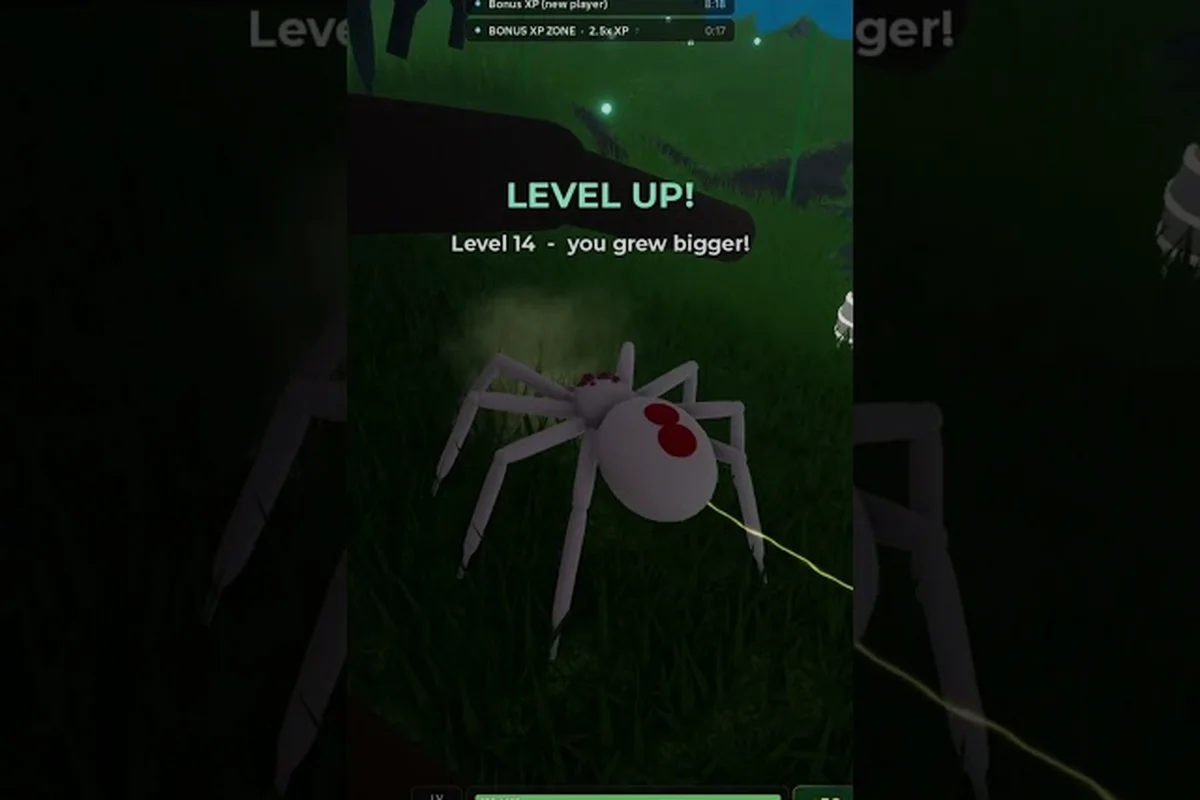
The game is built around a simple loop: you hatch as a tiny spider, find scattered food, eat to gain growth progress, and eventually unlock larger insect forms. The Bug Tree is central to that progression, while the bugs tab serves as a cleaner place to review what you have found. According to community data, the collection includes more than 30 insect forms, ranging from common houseflies and moths to tarantulas, black widows, and giant prehistoric creatures.
What the collection view shows
The collection is most useful when you treat it as a progression dashboard rather than a decorative list. You can compare forms, note which creatures fit your preferred play style, and avoid overlooking a useful insect while focusing only on the largest silhouette.
| Collection item | What it helps you judge | Practical value |
|---|---|---|
| Current insect | Your active form and current progression | Shows what you can use immediately |
| Available forms | Creatures already unlocked or encountered | Expands your tactical options |
| New or locked forms | Missing progression goals | Encourages continued hunting and growth |
| Size indicators | Body scale and growth stage | Helps estimate reach and target size |
| Stat details | Health, damage, speed, bite speed, and stamina | Supports informed selection |
If your main concern is comparing body scale, the insect size overview explains how larger forms connect to stronger food sources and wider combat reach. Remember that a larger insect is not automatically the best insect: its speed, stamina, or attack setup may be less suitable for the encounter.
Reading an insect entry
A productive review begins with the body size and role of the insect. Spiders and many early forms move along the ground, while flies and moths gain access to the same maps with different movement demands. That distinction matters because a form can have excellent reach but struggle to maintain pressure against a fast target.
| Information to check | Questions to answer | Selection result |
|---|---|---|
| Size | Can it safely pressure nearby prey? | A form matching your current food tier |
| Health | Can it survive repeated bites? | A durable option for contested areas |
| Bite damage | Will it defeat a target quickly? | A stronger choice against larger insects |
| Bite speed | How fast can it attack? | Better for closing on moving prey |
| Speed | Can it chase or escape? | Suitable for roaming and hunting |
| Stamina | How long can it sustain activity? | Important for flyers and extended chases |
The collection also helps prevent wasted movement. Rather than switching to a creature whose advantages do not fit the current route, note two or three forms and give each a clear purpose. One may serve as a food-gathering form, another as a fighter, and a third as a safer option for crowded servers.
Bug Evolution Selecting an Insect for Your Run
Selecting an insect works best when you match the form to the immediate task. Bug Evolution gameplay is continuous, so your next choice may depend on whether you are farming small food, contesting a kill, escaping danger, or preparing for a larger prey tier. The right selection is not determined by appearance alone; it comes from the relationship between size, stats, and available resources.
Match selection to the current objective
| Current objective | Preferred selection traits | Why it works |
|---|---|---|
| Gather starter food | Small form, practical movement, low-risk positioning | Keeps food collection efficient without unnecessary fights |
| Hunt nearby insects | Balanced speed, health, and bite damage | Improves the odds of winning mixed encounters |
| Challenge a larger rival | Greater size and bite damage | Increases reach and shortens the fight |
| Escape a dangerous player | High speed and useful stamina | Creates more room to disengage |
| Explore open terrain | Reliable movement and strong health | Reduces the cost of accidental encounters |
When reviewing Bug Evolution selecting an insect options, compare what the game actually asks you to do. A form with high damage but weak stamina may be ideal for a short ambush, whereas a balanced insect can perform better when a fight becomes a chase. The best result comes from setting a role before you enter an area.
Early, middle, and late selection priorities
During the early game, small food is dense in grassy fields and open areas. Your priority is to find enough meals to move up the size ladder without being drawn into an avoidable fight. At this stage, food efficiency matters more than displaying a powerful form.
In the middle game, food value and prey availability begin to vary by region. Larger food can advance growth faster, but traveling toward it may expose you to stronger insects. Select a form that can protect itself while traveling, and keep a route back toward safer starter areas if stamina becomes low.
Later in a run, large forms can access prey that smaller insects cannot handle. However, the server population also becomes more dangerous because every player in the 15-player world is moving toward the same resources. The strongest choice is therefore situational: powerful enough to claim valuable food, yet mobile enough to avoid being trapped.
For a wider look at the creatures involved, the insect collection and rarity guide can help distinguish common forms from unusual ones. That comparison becomes particularly valuable when two insects have similar visual appeal but different stamina demands.
A repeatable selection checklist
Use the following sequence whenever you open the collection: first, review the bugs tab to identify which insects are currently available and which can be selected; then compare their size, health, bite damage, speed, and stamina before committing to a switch. Because insect selection affects both combat duration and the ability to secure food afterward, choosing from the bugs tab should be a deliberate comparison rather than an automatic choice of the largest insect.
-
Check your current size and the size of your intended target.
-
Compare health and bite damage to judge the likely duration of combat.
-
Check speed and stamina for the chase that may follow.
-
Identify whether valuable food lies on a safe route.
-
Switch only when the new form offers a clear advantage.
This checklist prevents the common mistake of changing insects simply because a larger option becomes available in the bugs tab. For example, a larger insect may deal more bite damage, but if its lower speed makes it lose a chase, it may not reach the next food source before your current form does. Switching also creates a brief vulnerability during the transition, so the safer choice is the form that preserves health, maintain access to safe food, and avoids wasting stamina on an unnecessary pursuit. A larger body is worth taking only when its combat advantage clearly outweighs those movement and recovery costs.
Bug Evolution Attack Mechanics and Combat Stats
Bug Evolution attack mechanics center on bite damage and bite speed, while speed and stamina determine whether you can reach a target or leave a fight. These five attributes are the core combat framework. The bugs tab is where you can compare them before committing to a difficult encounter.
How the five stats work together
| Stat | Combat role | Best time to prioritize it |
|---|---|---|
| Speed | Closes distance and supports escape routes | When targets are mobile or the map is exposed |
| Health | Survives enemy pressure and mistakes | Before crowded-server hunting |
| Bite damage | Reduces the number of attacks needed | Against larger or stronger prey |
| Bite speed | Increases the pace of damage | When winning through repeated bites |
| Stamina | Supports sustained movement and activity | During chases, exploration, or flying forms |
The interaction between these stats explains why raw damage is not the only measure of strength. A high-damage insect with poor mobility may need to land the first bite, while a faster insect can maintain pressure. A durable insect can survive the trade, and a high-stamina form can outlast an opponent whose resources are draining.
Understanding bite timing
A bite lands when your insect reaches the target and completes the attack action. Bite speed determines how quickly that action can repeat, while bite damage determines the value of each successful hit. If an enemy has more health, the same attack becomes slower because more bites are required.
These situations can be distinguished by what limits the insect during an encounter: remaining bite range, surviving the target’s retaliation, or sustaining the chase. For example, a player outnumbered by a stronger insect should prioritize a safe retreat rather than spend stamina forcing another attack, while a fast target requires cutting off escape routes before bite speed becomes relevant. Comparing Speed, bite speed, and Health in the Bugs Tab helps identify whether positioning, damage output, or endurance is the real bottleneck.
| Situation | Primary stat to watch | Secondary stat to watch | Preferred approach |
|---|---|---|---|
| Target escapes quickly | Speed | Bite speed | Cut off the route and maintain contact |
| Target has high health | Bite damage | Health | Win through efficient, protected attacks |
| Chase continues too long | Stamina | Speed | Avoid overextending through open terrain |
| Player outnumbers you | Health | Speed | Secure safer food rather than forcing a fight |
Bite damage and bite speed work together, but they do not replace positioning. A strong insect still needs to reach its target, and a fast insect still needs enough damage to discourage a larger opponent from turning the encounter into a retreat. Players who understand this distinction waste fewer food supplies and avoid overestimating a single stat.
Choosing between burst and sustained attacks
A burst setup emphasizes damage and speed. It works best against prey that can be caught quickly, especially when the target cannot recover health or escape before the next bite. This approach can also punish larger insects if the first hit creates enough space to follow up.
A sustained setup relies on health and stamina. It is stronger for long chases and crowded areas where a single mistake could allow another player to intervene. The drawback is that many weak attacks take longer, giving a faster opponent more chances to escape.
| Build tendency | Best moment | Main risk |
|---|---|---|
| High damage, high bite speed | Close-range ambushes | Low tolerance if the target escapes |
| High health, high stamina | Extended pursuits | Slower fights and more food spent |
| High speed, balanced health | General-purpose hunting | Less burst damage than specialists |
| High health, high bite damage | Risking a larger target | May run out of stamina during pursuit |
Since coins from eating, kills, and survival fund stat upgrades, inspect the shop after leveling. Community reports indicate that early Bite Damage and Stamina ranks usually provide better value than expensive late ranks. That means early damage can be a practical route to safer prey, while low-cost stamina can make short hunts much less punishing.
The Bug Evolution Size System and Progression
The Bug Evolution size system links eating, growth, reach, and access to prey. Food spawns around the map, each bite adds growth progress, and larger food generally advances progress faster. As the body grows, it gains combat reach and can pursue larger targets, making size both a progress indicator and a practical combat stat.
Size, food, and target compatibility
| Player size | Food strategy | Target strategy | Main consideration |
|---|---|---|---|
| Very small | Collect frequent starter food | Avoid larger insects | Use open grass fields efficiently |
| Small to medium | Mix small food with better sources | Challenge nearby prey | Preserve health for competition |
| Medium to large | Seek larger, faster-advancing food | Contest valuable kills | Watch stamina during travel |
| Very large | Search for the richest available prey | Pressure dominant insects | Expect other players to target you |
The size system creates a self-reinforcing loop. Eating improves growth, growth improves access to valuable food, and larger food can produce stronger growth. Yet the same visibility attracts rivals, so players need to decide when progress is worth the attention it attracts.
Reading growth progress
Progress is tied directly to eating rather than to a separate battle ranking. Smaller common food is convenient when it is plentiful, but larger pieces accelerate growth. A balanced route often combines reliable starter meals with one or two valuable sources, because relying entirely on rare food can leave a player searching too long.
This split works best when you judge the Bugs Tab by your current insect form, available food, and nearby risk rather than by a universal “best” insect. For example, a small starter insect can safely collect scattered food while avoiding attacks, but a larger form needs access to richer food sources to justify its size advantage. After selecting an insect in the Bugs Tab, test whether its movement, reach, and attack mechanics fit the route you can actually sustain. A body that looks stronger on the stat bar may still be ineffective when server population is high and open space is limited.
| Run phase | Food mix | Main objective |
|---|---|---|
| Opening stage | Mostly scattered small food | Reach the first useful size without combat |
| Expansion stage | Small food plus occasional larger pieces | Build speed and health while locating richer zones |
| Hunting stage | Larger food when routes are safe | Reach forms capable of taking valuable prey |
| Endgame pressure | Best available food with escape routes | Preserve the lead in a crowded server |
The exact growth penalty after death is not documented, so it is safer to plan around confirmed behavior. Death returns the player to the spawn area at the current evolved form, and the starter area remains useful because small food is plentiful there. Do not build a strategy around an invented percentage loss.
For additional context on why size alone can mislead, compare the server population and stat bar overview. A larger body may have more reach, but a server filled with 15 players changes how much space you have to use it.
Upgrades that support the size journey
Leveling grants points that can raise the five core stats, while coins purchased from food, kills, and survival can fund additional upgrades for the current insect. Because attack mechanics determine how damage is applied, prioritize the stat tied to your failure point: Health when enemies survive repeated hits, Speed when targets escape contact, and Bite Speed when attacks land too slowly. The best upgrade depends on the selected insect’s form, its growth requirements, and the immediate danger; a fast, fragile insect may need Health before focusing on Bite Damage.
| Current problem | Stat to improve | Result |
|---|---|---|
| Repeatedly lose close fights | Health or Bite Damage | Increases survival or shortens damage needed |
| Targets escape during attacks | Speed or Bite Speed | Improves contact and attack frequency |
| Chases end before a victory | Stamina | Reduces the exhaustion of sustained movement |
| Food collection is too slow | Speed and growth-related purchases | Improves movement and progression efficiency |
Instead of maxing one attractive stat, distribute early upgrade points across weaknesses so the insect can handle more combat situations. For example, if a chase repeatedly ends because Stamina drains before the target is caught, improve Stamina before adding Bite Damage; if contact succeeds but the enemy survives several attacks, prioritize Health or Bite Damage. This creates a more reliable setup for the size journey, while a glass-cannon insect with low Health and high damage may perform well against weak prey but fail against enemies that withstand repeated hits.
Practical Bug Evolution Mechanics for Survival Runs
Reliable Bug Evolution mechanics combine food discipline, fight selection, and server awareness. Each server supports up to 15 players sharing one map and lobby, so every valuable food source can become contested. A good insect choice supports your route through that pressure rather than merely looking impressive.
A structured survival loop
| Stage | Player action | Decision goal |
|---|---|---|
| Spawn | Locate grass fields and small food | Grow without unnecessary combat |
| Early growth | Eat steadily and improve weak stats | Reach a useful combat form |
| Mid-run | Choose safer versus richer food zones | Balance growth against exposure |
| Active hunt | Select prey by health, size, and speed | Win without excessive stamina loss |
| Late contest | Reassess rivals and escape routes | Protect accumulated progress |
During the opening stage, gather food from starter areas rather than chasing distant targets. Grass fields and open areas provide the densest beginner food, allowing growth progress without a long detour. This is especially useful after a death because the respawn area remains a dependable recovery zone.
During the middle stage, combine exploration with stat development. Buy affordable damage or stamina improvements when they solve a repeated problem, then adjust the insect if the current form can no longer use available food efficiently. The goal is not to switch constantly; it is to identify when a change solves a concrete limitation.
During the late stage, treat sightlines and rival behavior as part of combat. A large insect may have excellent reach, but it can also become the target that everyone else wants to remove. Keep an escape line, avoid chasing across open terrain with low stamina, and secure food only when you have enough health to absorb an interruption.
Team play and private sessions
Grouping with other players can speed up food gathering and make larger prey more manageable. The official game presentation explicitly invites players to team up, and the shared 15-player format creates opportunities for coordinated hunts. Teams are particularly useful when one member gathers while another handles threats, allowing each player to spend less time defending every meal.
Private servers offer a dedicated world for friends, which can make testing and coordinated hunting easier. They do not remove the need for good decisions, but they can reduce unpredictable interruptions. For additional multiplayer and shopping context, the team and upgrade guide explains how cooperation fits around the broader progression loop.
Player mistakes to avoid
| Mistake | Why it hurts | Better response |
|---|---|---|
| Selecting the largest unlocked insect | Reach does not guarantee safety | Compare all five combat stats |
| Fighting near the spawn crowd | More rivals can intervene | Gather first and choose quieter routes |
| Buying only final upgrade ranks | Coins may be spent inefficiently | Prioritize affordable early ranks |
| Chasing every visible target | Stamina and health drain quickly | Attack only worthwhile prey |
| Ignoring the server list | Every server is shared and competitive | Check population before committing |
Server awareness is part of Bug Evolution mechanics, not background decoration. The same insect that dominates a quiet area may be less valuable in a crowded match, while a smaller, faster form can survive by avoiding prolonged engagements. Read the situation before choosing a target.
Turning the Bugs Tab into a Competitive Advantage
The bugs tab becomes more than a collection screen when you use it to plan your next move. Compare your active insect with the size and stats of likely targets, identify the weakest upgrade, and choose a route that supports the next growth threshold. This turns a menu check into a repeatable decision process.
Before choosing a form
Before choosing a form, compare the bug’s current size, bite damage, speed, and stamina with the food and rivals in the area. For example, a small ant may reach scattered food quickly, but if a larger beetle repeatedly contests it, switching through the bug evolution bugs tab can prevent wasted health and stamina. Use the selection screen to test whether your current insect’s attack mechanics and size actually fit the encounter, rather than changing forms for every minor skirmish.
-
What food is nearby, and what size is it?
-
Which insect or player is most likely to contest it?
-
Can my current speed and stamina reach that target?
-
Will my bite damage and health finish the fight safely?
If the answers point to the current form, keep it. If they reveal a consistent mismatch, use the bugs tab to select a more suitable insect. The goal is not constant optimization; it is avoiding obvious mismatches that waste food and health.
Before agreeing to a duel
Accept a fight when your expected advantage is clear. A large bite-damage advantage can make a risky target worthwhile, but only if the target cannot simply run away. Compare the opponent’s apparent size with your reach, then account for stamina before committing. If the target is faster, consider whether the available food or territory justifies the pursuit.
Do not begin an attack in an exposed area if another player is close enough to interfere. Server awareness can turn a favorable duel into an unfavorable three-way encounter. When uncertain, return to food gathering, improve a weak stat, or reposition for a better approach.
After the fight
Use the outcome to refine the next selection. If you win but nearly lose stamina, prioritize endurance. If you deal damage slowly, improve Bite Damage or Bite Speed. If the enemy reaches you repeatedly, increase Speed or Health. A post-fight adjustment is more valuable than switching to a random insect, because it connects the menu choice to an observed weakness.
The strongest pattern is simple: collect, compare, commit, and adjust. Collect food to fuel growth, compare forms and stats in the bugs tab, commit only to favorable encounters, and adjust after evidence shows where the build is weak. That process makes Bug Evolution gameplay more deliberate while preserving the fast, opportunistic rhythm of a survival game.
Frequently Asked Questions
What does the bug evolution bugs tab show?
The bug evolution bugs tab brings your insect collection together with progression and combat information. It lets you review available forms, compare body size, and check attributes such as Speed, Health, Bite Damage, Bite Speed, and Stamina. Its practical value comes from turning collection progress into better choices during the same run.
Should I select the largest insect I can unlock in Bug Evolution?
Not always. A larger insect generally has more reach and can target larger prey, but it may lose fights because of poor speed, health, bite speed, or stamina. Choose a form whose strengths fit the current food route and likely opponents, then improve its weak stats with level points or coins.
How do I decide which insect has better attack mechanics?
Compare Bite Damage with Bite Speed for direct combat, then use Health, Speed, and Stamina to judge whether you can reach and sustain an attack. High damage can shorten a fight, while speed and stamina help maintain contact. A balanced form is often safer because it handles more opponents and escape situations.
Does dying remove progress in the Bug Evolution size system?
The confirmed behavior is that death returns you to the spawn area at your current evolved form, where small food is available in the grassy starter region. The exact numerical growth penalty is not documented, so players should not assume a specific percentage loss. Recovering with nearby food is the safest approach.
Is changing insects necessary during Bug Evolution gameplay?
Changing forms can help when your current insect no longer accesses suitable food, cannot reach prey, or lacks the endurance for repeated fights. It is unnecessary when the current form still performs well. Compare stats and objectives before switching, because unnecessary changes can cost time and put you in exposed areas.