A Bug Evolution leveling guide matters because safe food farming, correct upgrade order, and smarter fights can move you through the Bug Tree faster than constant risky combat. Use the routines below to gain levels and coins without wasting time on avoidable deaths.
Understanding Bug Evolution Levels and Growth
Bug Evolution distributes progress through eating, kills, and survival rather than a separate experience bar. Every bite and defeated insect contributes progress toward the next level, while reaching a level can unlock Bug Tree nodes and award growth points. This makes movement and food collection just as important as damage.
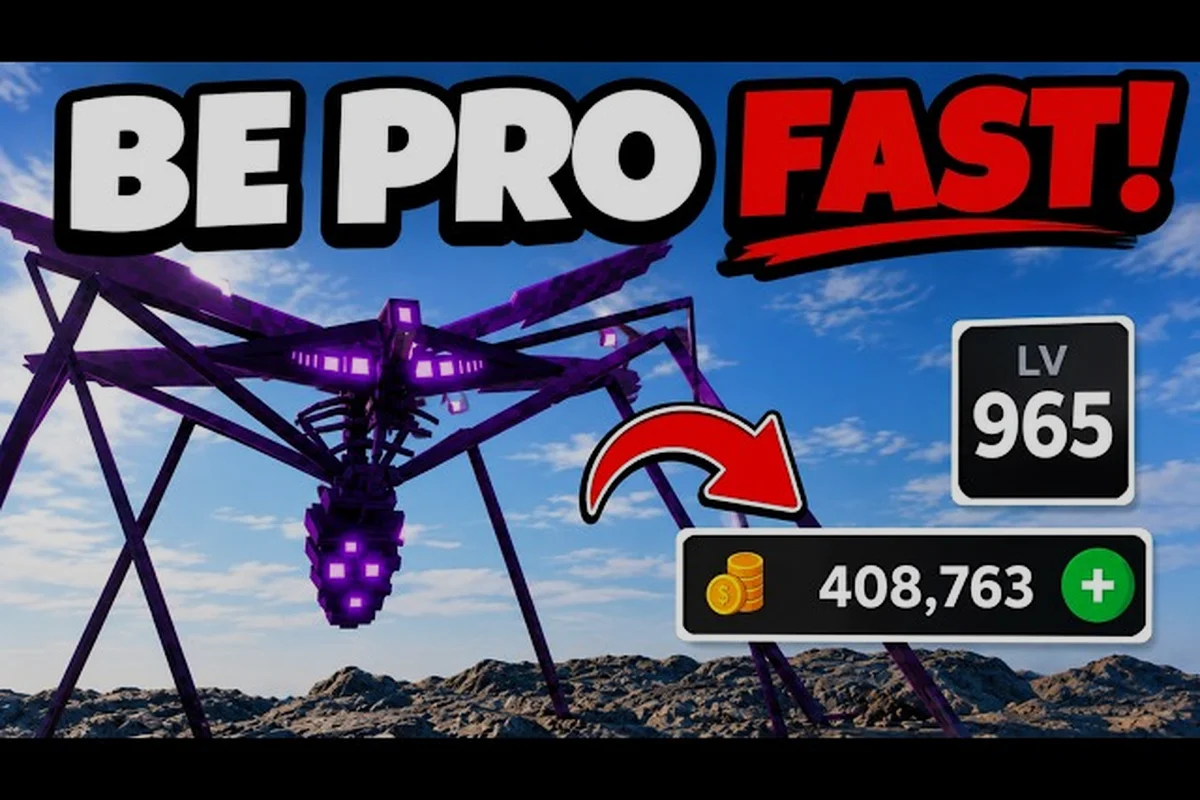
The Bug Tree organizes progression across tiers labeled T1 through T6. Some branches require both a level threshold and additional growth conditions, so reaching a new level does not automatically make every evolution available. The interface shows the insect’s current level beside its name, including examples such as LV 1, LV 10, LV 20, and LV 30.
How Progress Is Earned
Food is the most dependable source of early progress because it can be gathered without starting a fight. Kills can accelerate advancement, but they also cost stamina, expose you to ambushes, and can end your run if stronger insects attack. A safe player should therefore eat continuously and fight only when the reward is clear.
| Progression source | Typical usefulness | Main risk | Best use |
|---|---|---|---|
| Eating scattered food | High | Low | Steady early levels |
| Eating in dense food areas | Very high | Medium | Faster XP and coins |
| Killing smaller insects | Medium | Medium | Useful when food is scarce |
| Fighting stronger insects | High but inconsistent | High | Milestones and rare branches |
| Team-assisted food farming | Very high | Lower with coordination | Busy servers and safer farming |
The distinction matters because the bug evolution level system is not simply a damage check. Your size, level, available nodes, and survival time all affect whether progress is efficient. Fighting constantly may produce a few large gains, but regular eating usually produces steadier advancement with less downtime.
Level Milestones and the Bug Tree
Community observations place visible progression at LV 1, LV 10, LV 20, and LV 30, with six labeled tiers extending through the Bug Tree. No official max level has been published, so it is inaccurate to claim that LV 30 or T6 is the final cap. These are currently visible milestones, not confirmed endgame limits.
| Progression point | Verified or observed status | Practical priority |
|---|---|---|
| LV 1 | Starting level shown in the interface | Find nearby food immediately |
| LV 10 | Visible milestone; spider stage reported by players | Buy the first damage upgrade |
| LV 20 | Visible milestone in the interface | Reassess evolution branches |
| LV 30 | Visible milestone in the interface | Continue toward the deepest unlocked nodes |
| T1–T6 | Tier labels visible in the Bug Tree | Meet level and growth requirements |
| Maximum level | No published cap | Do not treat LV 30 as the limit |
Because the maximum level remains undocumented, progression advice should focus on the next visible requirement rather than a supposed final number. The Bug Evolution evolution path guide explains how branches, milestones, and unlock conditions fit together for players who want to plan their next form.
Fast Routines for Bug Evolution Leveling
The bug evolution fastest way to level up is to combine dense food routes with deliberate combat timing. Eat everything within a safe radius, move before stronger insects notice you, and use fights only to finish targets that are already weakened or trapped among abundant food.
For the latest bug evolution leveling details, consult the Bug Evolution Leveling Guide video for authoritative mechanics and progression information.
The Opening Patrol Loop
Begin with the nearest small food item instead of chasing distant prey. Eat until you can safely challenge the next nearby target, then move to a new patch before enemies close in. This opening sequence keeps food conversion high and reduces the risk of losing accumulated progress.
| Phase | Action | Purpose | Upgrade decision |
|---|---|---|---|
| First minute | Eat the closest food | Start growth without a fight | Save coins |
| Early levels | Rotate between nearby food patches | Maintain steady progress | Buy Bite Damage level 1 |
| Mid levels | Clear small insects only when safe | Add progress and coins | Add Bite Speed |
| Higher levels | Farm dense areas, then test stronger prey | Balance XP and risk | Add Health as needed |
| Late session | Target progression nodes | Reach deeper Bug Tree tiers | Improve survivability |
This loop is more reliable than racing between distant food sources. Each stop should produce enough food to justify the travel time, and each fight should improve either growth, coins, or access to a milestone. If a target offers none of those benefits, passing it by is an efficient choice.
Best Food-Farming Route
The best route stays in open grass fields where food appears frequently and retreat space remains available. Move in short arcs rather than a straight line across the map, because a curved patrol exposes more food while preserving several escape routes. More detailed food-location advice appears in the Bug Evolution food-farming guide.
A productive route has three qualities: dense pickups, short travel gaps, and fewer dangerous insects. If one area supplies several food items in quick succession, remain there until it is depleted instead of moving immediately after each pickup. That reduces wasted movement and keeps the level-up rhythm consistent.
When to Fight
Fighting is most efficient when the target is smaller, isolated, or already hurt. Start the encounter only if you have enough stamina and can retreat toward open ground. If a larger insect approaches while you are eating, abandon the pickup and preserve your run because a single death can erase more time than one missed meal.
Community experience also suggests that team play improves this routine. One player can clear a food pocket while another covers the approach, allowing both to spend more time eating and less time defending. Coordination matters more than simply crowding around the same target.
Coin Farming Without Slowing Your Leveling
Coins and food often come from the same actions, but your spending priorities determine whether that income compounds. Every food item can contribute to growth and coins, while stronger bites can add coins as well. The key is to spend early earnings on stats that reduce the time and risk of future fights.
The First Purchases to Make
The recommended opening purchase is Bite Damage level 1, followed by Bite Speed. Damage helps you finish opponents before they retaliate, while bite speed reduces the time you remain exposed. Health becomes the third priority, with Speed and Stamina generally developed later.
| Upgrade | Early benefit | When to prioritize it | Why it improves the grind |
|---|---|---|---|
| Bite Damage | Shorter fights | Immediately after first earnings | Lowers time exposed to larger insects |
| Bite Speed | Faster repeated bites | Second combat purchase | Reduces stamina spent per target |
| Health | Better survival | After damage and bite speed | Helps recover from ambushes |
| Speed | Easier repositioning | When movement limits farming | Supports safer food collection |
| Stamina | Longer activity | After core combat stats | Improves endurance in extended routes |
Coins are not interchangeable with Robux. The player-controlled shop uses coins, while the separate Robux Spiders tab uses Robux. Spending real-money currency does not replace the need to farm coins, and the Robux Spider mechanics guide explains that separation in more detail.
Reliable Coin Routine
After buying the first damage upgrade, repeat a three-part loop: collect a cluster of food, spend a short period hunting weaker insects, then return to safe food. This method keeps growth active and gives combat a defined purpose instead of turning every encounter into an extended battle.
The bug evolution how to get coins question comes down to avoiding idle travel, reducing defeats, and making early purchases that improve efficiency. If you are planning a dedicated money session, compare that approach with the Bug Evolution money guide, which focuses specifically on coin-farming routes.
Efficient Combat Timing and Upgrade Decisions
Fast leveling does not require reckless fighting. It requires ending encounters at the right moment. Every bite you land contributes progress, but staying in a fight after your target is weakened increases the chance that another player or insect interrupts the conversion.
Combat Timing Rules
Attack when your target is occupied with food or another lower-level insect, then finish it before it turns the engagement into a prolonged exchange. Avoid beginning a battle near a stronger insect’s territory because multiple threats can surround you, especially during a busy server.
| Situation | Recommended decision | Expected benefit |
|---|---|---|
| Small insect beside dense food | Fight it | Adds coins and progress without leaving route |
| Strong insect in open territory | Retreat or reset | Preserves collected growth |
| Two weak insects together | Engage one at a time | Reduces simultaneous damage |
| Enemy already damaged by another player | Observe before attacking | Avoids unnecessary stamina loss |
| Food spawns behind an enemy | Circle around it | Keeps both food and safe movement available |
| Low stamina during combat | Disengage | Prevents a death and reset |
These rules make the bug evolution how to level up fast routine more consistent. You are not ignoring combat; you are selecting encounters where the time spent produces both progress and coins. A short, controlled fight is often worth more than a longer battle against a much stronger insect.
Upgrade Milestone Checklist
The first milestone should be reaching the spider stage around LV 10 and purchasing Bite Damage level 1. This checkpoint prevents a common early-game failure: accumulating enough food to unlock a form but remaining too weak to survive the route beyond it.
Use each checkpoint as a decision point rather than a passive goal: before moving on, confirm that food income can still support the next evolution, your current bug can defeat nearby enemies reliably, and the next Bug Tree requirement is affordable. For example, if a Bug Tree unlock needs more coins than your balance and spending would weaken your current form, keep earning food instead of rushing the purchase. This approach keeps Bite Damage, Bite Speed, and upcoming evolution requirements aligned with the resources you actually have.
- Eat the closest food immediately after hatching
- Rotate through multiple nearby food patches
- Reach the spider stage around LV 10
- Buy Bite Damage level 1
- Add Bite Speed after the first combat upgrade
- Choose between leveling and saving coins based on the next Bug Tree requirement
Players searching for bug evolution how to level up fast often lose time by saving every coin. Upgrades are part of efficient leveling when they reduce fight duration, preserve stamina, or make it possible to cross a dangerous route safely.
Maximizing Progress in a Bug Evolution Session
A successful session balances food collection, upgrades, and evolution checks. The player should always know the next goal: gain another level, save for a combat upgrade, or unlock a Bug Tree node. Without that focus, a session can drift into random chasing with inconsistent returns.
Mid-Session Decision Points
Check the Bug Tree after every major level increase. If the next node requires only the level you just reached, spend the required growth and move on. If it requires additional coins, keep farming rather than attempting to force an unavailable evolution.
| Current goal | Best action | Avoid |
|---|---|---|
| Next level | Eat continuously in a dense route | Long fights against stronger insects |
| First damage upgrade | Accumulate coins from food and weak kills | Saving every coin without improving combat |
| Specific evolution | Meet the visible level and growth conditions | Assuming coins alone unlock every node |
| Stronger lobby position | Improve damage, bite speed, and health | Spreading coins across every upgrade |
| Maximum progress per session | Alternate food farming with short fights | Farming one route until an ambush ends the run |
Food should remain the core of every Bug Evolution session because movement and feeding drive level gain, while kills mainly accelerate coin income. For example, if a weak insect blocks a dense food route, kill it only when the drop can fund the next Bug Tree node or when postponing the fight would expose you to a stronger enemy; otherwise, keep eating and preserve the reliable level loop. This prevents short-term coin gains from costing several levels of progress.
Handling Crowded Servers
Busy servers provide more food, coins, insects, and players, so each cluster can support faster progression but also attracts stronger competitors. For example, when several bugs gather around one food source, switch to a nearby cluster with more insects instead of exposing your Bug to repeated attacks. Vary patrol routes, avoid staying at a spawn point, and treat stronger players as environmental hazards rather than guaranteed upgrades; a short retreat can preserve the experience needed to level up quickly.
If another player contests a food area, move to another cluster instead of starting a fight that may not pay back the time. The king-of-the-server crown and the deepest Bug Tree branches are long-term goals; there is no advantage to sacrificing a safe farming streak for a contested early exchange.
Knowing When to Stop
Stop pushing when stamina is low, the server becomes too crowded, or your next upgrade cannot be purchased after another long farming circuit. Leaving with a clean run preserves more value than dying while attempting one final target. The Bug Evolution how-to-get-rich progression guide offers additional ways to evaluate the value of a farming session and its spending decisions.
Common Leveling Mistakes and Quick Corrections
Most slow progression comes from treating Bug Evolution like a traditional arena game: it is a survival-and-evolution simulator where food controls the pace, so forcing every encounter to end in a kill actually reduces efficiency. Instead of chasing damage at the cost of food, prioritize safe feeding opportunities, conserve health between food sources, and retreat from stronger bugs when the potential coin and evolution XP gain is lower than the resources lost in the fight. This distinction matters because Bug Evolution leveling depends on continued survival and growth rather than a kill count; once food becomes scarce, even a successful encounter can leave the player unable to afford the next food cost, slowing both level progression and coin income.
Mistake One: Fighting Everything
Killing a stronger insect may award more evolution progress and coins, but the same time can produce more food when spent safely on weaker targets. Use the insect’s size, local danger, and current spawn area as filters rather than attacking every creature that moves. For example, a small enemy that blocks your route may be worth eliminating for immediate EXP and coins, while a large nearby insect can end the run through heavy damage or death before its rewards are collected. Compare the target’s EXP-and-coin value with the risk of losing HP, food, or position, then farm the safer group until you can handle the stronger insect efficiently.
Mistake Two: Hoarding Early Coins
Saving every coin feels productive, but early damage and bite speed directly shorten future encounters in Bug Evolution. Spend the first earnings on damage, bite speed, or attack power so each hit removes more enemy HP and reduces the number of attacks needed per kill. For example, if a battle normally takes ten bites, a 20% damage increase can cut that to roughly eight, accelerating both coin farming and bug evolution leveling. Once combat is more efficient, return to farming with a stronger routine rather than hoarding coins that do not improve your current damage output.
Mistake Three: Ignoring the Bug Tree
Players should check a level’s Bug Tree unlocks before committing to a single evolution path, since the next node may require a specific rank, Bug Type, or resource rather than merely enough experience. For example, a high-damage node that looks ideal for fast progression can be unusable if its required Bug Type has not been reached, forcing the player to spend coins on an unwanted branch. Compare the next two available nodes and verify both the level requirement and growth condition first; this keeps the chosen build relevant while avoiding coins wasted on a temporarily locked evolution.
Mistake Four: Treating LV 30 as the Cap
The game currently displays milestones through LV 30, but no official max level has been published, so treat no confirmed cap as the accurate answer. In your bug evolution leveling guide, plan around the deepest objectives currently visible instead of assuming LV 30 ends progression. For example, after reaching LV 30, review the Bug Tree for unlocked evolution nodes and continue testing the fastest way to level up by farming food, collecting coins, and prioritizing damage and bite speed. If new milestones appear in a future update, adjust your coin targets and evolution path rather than building a plan around an unverified level limit.
| Mistake | Why it slows progress | Quick correction |
|---|---|---|
| Fighting every insect | Consumes stamina and raises death risk | Fight only useful or weakened targets |
| Saving all early coins | Leaves combat inefficient for too long | Buy damage, then bite speed |
| Farming without checking nodes | Misses requirements for desired evolution | Review the Bug Tree after each level |
| Assuming a hard cap | Wastes planning time on false limits | Track current visible milestones |
| Ignoring crowded servers | Forces fights over food | Rotate between food clusters |
Frequently Asked Questions
What is the fastest way to level up in Bug Evolution?
The fastest reliable method is to farm dense food areas, eat continuously, and use short fights against weak insects for extra progress and coins. Upgrade Bite Damage and Bite Speed early so battles take less time. Avoid stronger targets unless they are isolated or already weakened, since a death wastes the food and progress collected during the session.
Is there a confirmed maximum level in Bug Evolution?
No maximum level has been published. The interface shows milestones such as LV 10, LV 20, and LV 30, and the Bug Tree includes tiers labeled T1 through T6, but none of those visible values is confirmed as the final cap. Players should focus on meeting current level and growth requirements rather than assuming LV 30 ends progression.
How do I earn coins quickly without falling behind in levels?
Eat in dense food pockets because every item can contribute both growth and coins, then fight weaker insects when the local area is safe. Spend early coins on Bite Damage and Bite Speed to make later encounters faster. This is more efficient than entering long battles solely for coins because it keeps food collection and combat income operating together.
Should I buy coins upgrades or save them for an evolution?
Early combat upgrades generally improve your leveling speed more than hoarding every coin. Reach the spider stage around LV 10, buy Bite Damage level 1, and add Bite Speed next. After your survival and combat basics are stable, save for whatever coin requirement the next Bug Tree branch explicitly displays.
Does eating food still work at higher levels?
Yes, food remains a central progression source, but the surrounding danger can increase as you move through deeper tiers and busier parts of the map. Successful high-level players continue using short patrol routes, retreat before stronger insects approach, and treat fights as short additions to a dependable food routine rather than the main source of progress.