Choosing where to spend your levels in Bug Evolution depends on reading the bug tree guide correctly, because every confirmed tier and locked node changes the evolution path you can take. Whether you are planning a first run or a second insect, this walkthrough distills the branch structure into concrete routes.
Bug Evolution Bug Tree Guide: How the Branching System Works
The Bug Evolution bug tree guide matters because your first real branch choice changes later upgrades, combat priorities, and the resources you need next. As of October 2026, the tree runs through six labeled tiers, but only the lower species and branches are confirmed; this guide explains the known routes without inventing names for locked nodes.
Understanding Bug Evolution Evolution Tree Tiers
The Bug Tree is the evolution screen in Bug Evolution, and it functions as a branching progression system rather than a single straight line. Your insect advances from T1 through T6, while level and growth requirements determine which nodes become available. Selecting an available node changes the current insect into that form, so understanding the layout prevents wasted progression and poor resource planning.
Confirmed tiers and milestones
The following milestones are visible in the tree interface and current gameplay footage, creating a progression path from the Housefly starting point to the Top of the Bug Tree at T6. The tier table separates confirmed branches from locked nodes, so players can track Housefly, Spider, Locust, and Black Widow milestones without confusing speculative labels for verified forms. Deep-tier species names remain unverified and are labeled as locked placeholders rather than guessed, preserving a clear evolution checklist while avoiding unsupported evolution claims.
| Tier | Confirmed content | Known level milestone | Practical role |
|---|---|---|---|
| T1 | Housefly and basic early forms | Starting point | Food gathering and learning the HUD |
| T2 | Spider path begins | LV 10 | First major growth and combat reset |
| T3 | Locust branch and Black Widow branch | LV 20 milestone area | First meaningful build choice |
| T4 | Higher nodes shown as locked placeholders | Higher level required | Build-specific continuation |
| T5 | Locked placeholder stage | Higher level required | Late-session progression |
| T6 | Top of the Bug Tree | Highest milestone | End-of-route target |
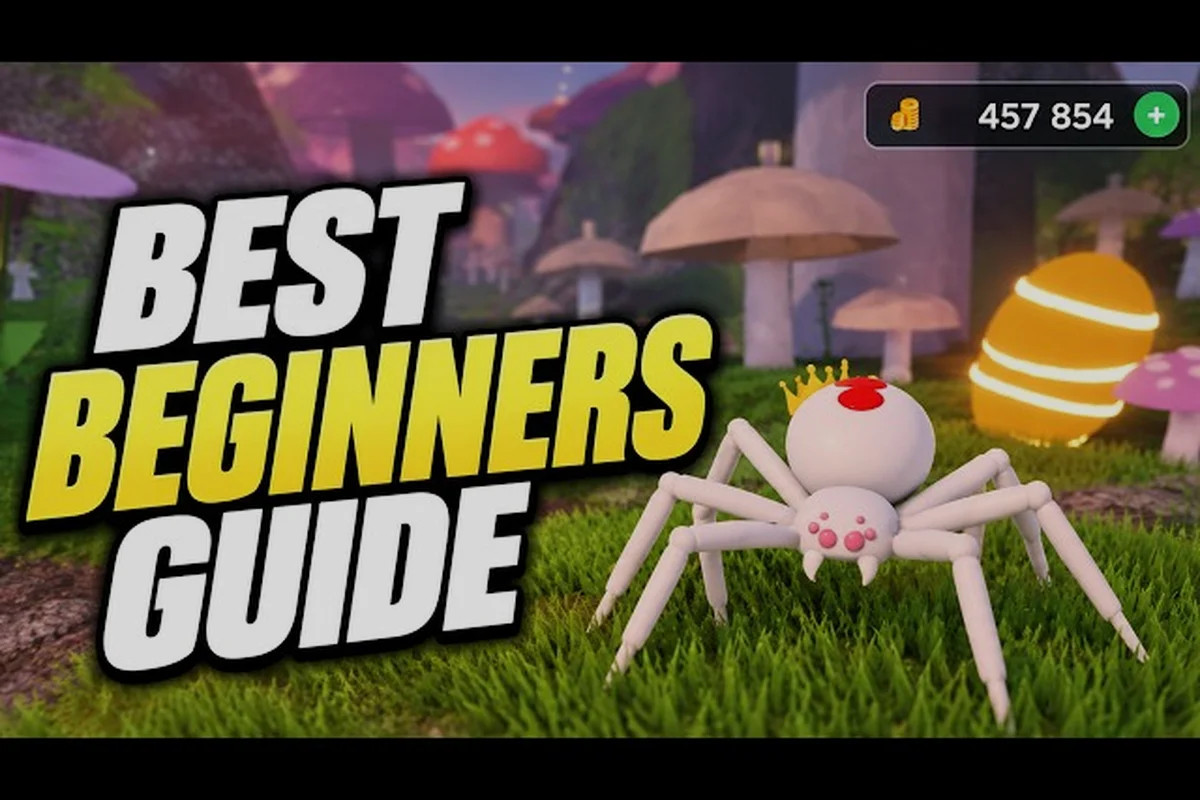
Community footage also shows a red-and-white Spider around the LV 20 area, a white-fluffy Spider at LV 30, and references to tarantulas on stronger spider routes. Because some labels vary between player reports, treat those names as directional rather than guaranteed official labels.
What the tree does not reveal
The upper tiers do not currently show dependable species names in the available interface. Some community videos use player-created labels, but those labels should not be treated as official releases. The practical impact is simple: plan around confirmed nodes, level thresholds, and combat style rather than building around an unannounced species.
For a wider look at current additions, the Bug Evolution update overview can help distinguish confirmed content from early community speculation. Cross-check each claimed Bug Evolution branch against its update date and current status, then compare the result with the live evolution tree: a node may be announced without appearing in the Bug Tree, shown in the tree without a species name, or still listed only as a future evolution target. This makes the overview useful alongside an evolve-all-insects checklist, because it separates implemented evolution paths from leaks and community wishlists rather than treating every reported branch as an available evolution.
What actually controls progress
Your level is the primary gate, while eating food fills the growth bar that advances the insect toward its next form. Coins matter for upgrades and purchases, but they do not directly buy an evolution node. This distinction is central to the Bug Evolution bug tree guide because players can mistakenly save coins expecting to purchase every branch.
| Progress resource | Main function | Common mistake |
|---|---|---|
| Food | Raises growth and level | Leaving nearby food uncollected |
| Coins | Purchases upgrades and other gear | Evolving with no upgrade money |
| Experience level | Unlocks tree nodes | Switching before reaching the threshold |
| Current form | Determines available stats and branch | Treating a new form as an instant power spike |
Choosing the First Bug Evolution Branch
The first genuine choice appears in T3, where the route separates toward Locust or Black Widow. This decision matters because each branch occupies a different section of the tree and supports a different combat plan. Choosing early does not lock out the entire game, but it shapes which nodes you pursue and how you spend the levels between branch unlocks.
Locust versus Black Widow
Locust is associated with a faster, more mobile style, while the Black Widow route points toward a spider-centered build. Current public footage does not establish exact damage, health, or movement multipliers for every branch, so compare the routes by their apparent role and the combat behavior shown by players rather than invented statistics.
| Choice | Apparent strength | Better approach | Watch for |
|---|---|---|---|
| Locust route | Mobility and pressure | Move around fights and collect food efficiently | Low durability if upgrades lag behind |
| Black Widow route | Spider identity and close combat | Build attack power and survive direct encounters | Narrow movement when players overcommit |
| White-fluffy Spider route | Distinct later spider option | Continue the spider-focused build | Higher-level requirement |
| Tarantula route | Late spider progression | Prepare resources for a stronger spider form | Availability and timing may vary by update |
Why changing forms can reduce immediate power
Selecting a new insect starts that form at its base power. If your previous form already has a nearly full growth bar, switching can therefore feel like a downgrade. Players often bank food progress, make essential purchases, and then evolve so the new form can grow quickly without sacrificing too much momentum.
That creates the central optimization in this Bug Evolution bug tree guide: form power is not the same as total route strength. A short-lived statistical dip can be worthwhile when it unlocks a stronger specialization. For example, moving into a weaker early insect may preserve food income and growth progress until its evolution path reaches a high-tier bug with better damage, health, or ability scaling; the relevant comparison is therefore the power available across the next several evolutions, not the current form’s peak stat.
A branch decision example
Suppose you reach LV 20 with a full growth meter, 60 coins, and only the first level of Bite Damage purchased. The smart move is not to evolve immediately. Buy the upgrade, eat enough food to create a progress buffer, and then choose Locust or Black Widow according to your preferred play style.
If you switch while broken and at low health, the new form may struggle before you can secure scattered food, leaving you vulnerable while trying to climb toward the next evolution node. A practical case is switching immediately after taking heavy damage: your health pool may be too small to absorb another hit, and the food left across the map may take longer to collect than the time you have to recover. Wait until your health is stable, or choose the branch whose movement and damage advantages better match your current position.
Bug Evolution Evolution Progress: Levels, Food, and Upgrades
Tracking progress requires watching both the level requirement and the current form’s growth bar. A Bug Evolution evolution checklist should therefore include more than the next species name, because a level threshold does not remove the need for food, coins, combat power, or safe positioning.
Early-game progression checklist
- Hatch and identify the closest small food source.
- Eat enough to reach LV 10 and unlock the Spider stage.
- Buy Bite Damage level 1 before making the first major evolution.
- Keep collecting food while fighting so growth does not stall.
- Reach the T3 milestone before selecting Locust or Black Widow.
- Save enough coins for the next useful upgrade after evolving.
- Check which branch nodes are unlocked rather than assuming every row is available.
- Avoid spending every coin immediately after a form change.
Suggested first-session sequence
| Order | Action | Reason | Success signal |
|---|---|---|---|
| 1 | Hatch and collect nearby food | Begins the growth cycle | Level and progress bar rise |
| 2 | Reach LV 10 | Opens the Spider stage | Spider node becomes selectable |
| 3 | Purchase Bite Damage level 1 | Prevents a weak first combat test | Upgrade appears in the HUD |
| 4 | Build a food buffer | Reduces post-evolution downtime | Growth bar remains useful |
| 5 | Enter the T3 split | Selects a lasting branch direction | Locust or Black Widow becomes active |
| 6 | Upgrade after evolving | Restores power in the new form | Bite Damage or another stat improves |
The community guide from VendoPlus’s Bug Evolution video supports the same basic sequence: hatch, feed in the grass fields, read the HUD, progress through the tree tiers, and use teamwork when hunting. Treat individual community numbers as current-version observations because balance and unlock pacing may change as the new 2026 release develops.
How to avoid stalled evolution progress
If your level stops increasing, prioritize nearby food rather than roaming for enemies. Combat is usually less efficient than collecting several food pieces in quick succession, especially when your current form has weak damage. Once the bar is close to completion, clear a safe area and eat the final food without being interrupted.
Coins create a second common bottleneck. A player can meet the level requirement but still arrive at an unlocked node without enough money to buy basic damage afterward. The Bug Evolution coin economy guide is useful for estimating how quickly purchases can be funded without treating the economy as permanent.
Bug Evolution Evolution Checklist for Every Tree Node
Before selecting a node, compare three things: whether it is unlocked, whether the current form has enough progress to sacrifice, and whether the next form will have usable combat power. This process turns the tree from a random unlock screen into a controlled route plan.
Node-selection checklist
- Confirm the node’s level requirement has been met.
- Verify the species name or branch in the tree interface.
- Compare the current growth bar with the new form’s base power.
- Check whether Bite Damage or another essential upgrade is affordable.
- Keep enough food nearby to rebuild the growth meter.
- Note which later node the selected branch leads toward.
- Reassess the route if an update changes a node’s requirement.
Route review by tier
| Tier | Decision focus | Upgrade priority | Main warning |
|---|---|---|---|
| T1 | Gather food consistently | Basic survival and early damage | Leaving food behind |
| T2 | Prepare for the Spider transition | Bite Damage level 1 | Evolving at zero progress savings |
| T3 | Choose Locust or Black Widow | Form-appropriate damage and survival | Treating both branches as identical |
| T4 | Follow the selected specialization | Stronger combat and utility | Assuming locked labels are official |
| T5 | Balance progress toward the top | Resource reserves for the switch | Advancing with no coin buffer |
| T6 | Reach the final milestone | Maximum available upgrades | Ending a session before the needed level |
When to hold your current form
Stay in the current form when the next node is close but locked, when your growth bar is nearly full, or when you cannot afford a basic upgrade afterward. A temporary delay usually preserves more total power than an immediate switch because the new form starts at its base strength.
When to evolve immediately
Evolve sooner when you have already bought the required upgrades, collected a substantial food buffer, and reached a branch node that unlocks a useful continuation. This is especially valuable when a player is close to the server’s stronger hunting areas and needs access to a more suitable form.
Bug Evolution Evolve All Insects: Practical Route Planning
A complete Bug Evolution evolve all insects run cannot be documented from the current public tree because T4 through T6 remain locked placeholders. The reliable objective is to prepare for every confirmed form and record your branch choices so the route remains efficient after future updates.
Confirmed collection targets
The available collection sequence begins with the Housefly, continues into the Spider stage, and reaches the T3 Locust and Black Widow branches. Later spider variants appear in player footage, including a red-and-white Spider, a white-fluffy Spider, and tarantulas, but exact availability can vary with version and route.
| Run stage | Target | Preparation focus | Confidence |
|---|---|---|---|
| Opening | Housefly | Food collection and HUD reading | Confirmed |
| First transition | Spider | Reach LV 10 and buy Bite Damage level 1 | Confirmed milestone |
| Mid transition | Red-and-white Spider | Reach the LV 20 area and save coins | Community-reported |
| White route | White-fluffy Spider | Reach LV 30 and continue food progress | Community-reported |
| T3 split | Locust | Build toward the mobile branch | Confirmed branch |
| T3 split | Black Widow | Build toward the spider branch | Confirmed branch |
| Deep tiers | Locked T4-T6 placeholders | Maintain levels and upgrade reserves | Names unverified |
For species identification beyond the tree, the complete Bug Evolution insect list can serve as a reference while still respecting the distinction between confirmed labels and community observations. It is especially useful when matching a new evolution-progress form against the table’s known tiers: treat the Housefly, Spider, T3 Locust, and Black Widow milestones as confirmed anchors, but flag red-and-white Spider, white-fluffy Spider, tarantulas, and locked T4–T6 placeholders as version-dependent or unverified until their route, level requirement, and final name can be confirmed.
Keep a personal tree log
Record the current tier, level, growth percentage, remaining coins, and next intended branch. This simple log makes it easier to notice whether an upgrade purchase would delay the next evolution more than expected. It also prevents accidental branch confusion when several forms share similar visual traits.
Use three route plans
| Route plan | Best use | Upgrade timing | Main benefit |
|---|---|---|---|
| Balanced run | Regular progression and learning | Upgrade once per major tier | Consistent growth with low resource stress |
| Collection run | Visiting every confirmed form | Upgrade before each branch change | Broader form coverage |
| Power run | Reaching the deepest unlocked node quickly | Buy essential upgrades immediately | Faster late-session progress |
Common Bug Evolution New Evolution Mistakes
Most progression mistakes come from treating a newly unlocked node as an automatic upgrade. In reality, the game is managing level, food progress, coins, and combat statistics at the same time. Correcting those priorities produces steadier Bug Evolution evolution progress than rushing every available prompt.
Mistake one: evolving with an empty wallet
An unlocked node does not provide free combat upgrades. If you spend all coins before switching, the new form starts with base power and no purchased support. Keep a small reserve and purchase at least Bite Damage level 1 when that option is available.
Mistake two: ignoring the growth bar
Switching can discard the current form’s accumulated growth-bar progress, including food collected toward that form’s evolution. The loss is greatest when the meter is nearly full: for example, pausing at 90% to collect one more food piece may reset that stored progress when the new evolution is purchased. In the bug evolution tree, collect several food pieces first, then evolve and rebuild the meter in the new form; if you must switch early, compare the new form’s tier in the evolution tree with the current bar before committing.
Mistake three: assuming every branch has the same role
Locust and Black Widow occupy different routes and appear suited to different combat approaches: Locust leans toward early-game mobility and close-range pressure, while Black Widow favors ranged control and later-game survivability. Because exact numerical comparisons are not currently confirmed, check each branch’s evolution requirements, tier position, and actual encounters rather than assuming one insect is universally stronger.
Mistake four: treating community labels as official names
In the bug evolution bug tree guide, T4 through T6 may remain locked placeholders rather than confirmed entries in the evolution tree tiers. Fan-created names and labels shared in videos can help players discuss an apparent route, but they are not official bug evolution new evolution discoveries. For a reliable evolution progress or evolution checklist, record only species visibly confirmed in-game; otherwise, use the tier as a reference point and mark the uncertain name as provisional.
Mistake five: ignoring updates
Bug Evolution is a new 2026 Roblox release, and unlock conditions may change as the developers adjust progression. Check the current interface before following an old route, especially around the red-and-white Spider, white-fluffy Spider, and tarantula milestones.
Frequently Asked Questions
What is the first major choice in the Bug Evolution bug tree?
The first meaningful branch occurs around T3, where the available route separates toward Locust or Black Widow. Each option leads into a different section of the Bug Tree and supports a different combat style. Confirm the milestone, upgrade Bite Damage, and keep a food buffer before making the selection.
How do I reach the Spider stage in Bug Evolution?
Reach LV 10 while collecting and eating food. Before evolving, buy Bite Damage level 1 and preserve enough coins for an upgrade after the switch. Because a new form begins at base power, arriving with both money and growth progress makes the transition much smoother.
Can I change branches after choosing Locust or Black Widow?
Current public information does not clearly confirm a free branch reset. Treat the T3 selection as a meaningful commitment and follow the connected nodes rather than assuming you can freely switch back. If the developers add a reset or broader branching option, check the updated tree interface and current patch notes.
Are the T4, T5, and T6 insects confirmed?
No dependable species names are confirmed for those upper tiers in the available public information. The interface shows locked placeholders, while community videos sometimes use player-created labels. Track the confirmed lower tiers and level requirements, and treat any deep-tier name as provisional until it appears officially.