Bug Evolution update log tracking matters because the game is expanding quickly, and each build can change insects, combat, progression, and events. Get a clear record of confirmed changes, announced content, and the next update milestones without confusing player-reported details with official patch notes.
Bug Evolution Update Log Overview
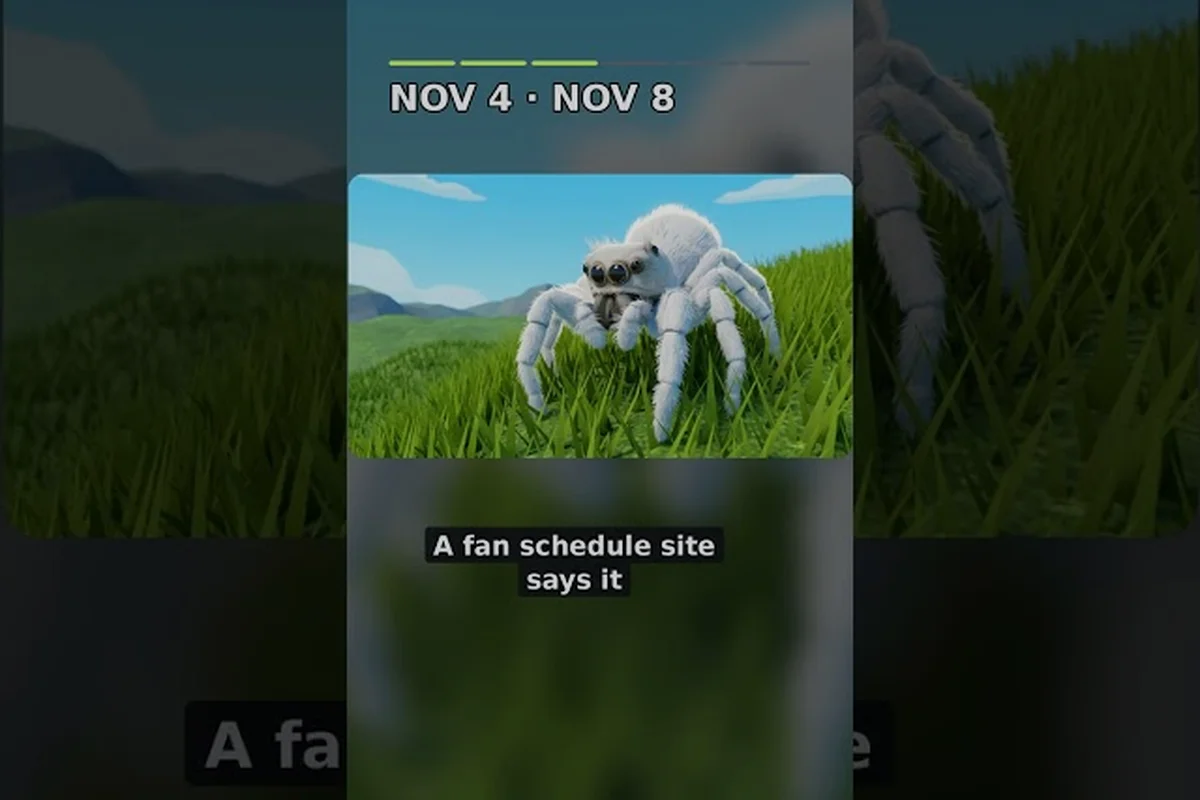
Bug Evolution is a new Roblox survival game by Corgi Crew, where players begin as a tiny spider, gather food, grow through multiple insect forms, and follow the Bug Tree toward stronger evolutions. Because the official store page does not publish a traditional numbered changelog, this Bug Evolution update log separates verified information from community reports and upcoming teasers.
The latest confirmed store activity occurred on October 29, 2026, when the game page was marked as updated. The exact items in that build were not documented publicly, so it would be inaccurate to claim specific balance changes. By October 30, the game had passed 3.9 million visits, roughly 20.8 thousand concurrent players, 20,645 favorites, and an average server population of 15 players.
| Verified signal | Latest known value | Last observed | Confidence |
|---|---|---|---|
| Store page update | Build refreshed | October 29, 2026 | High |
| Total visits | More than 3.9 million | October 30, 2026 | High |
| Concurrent players | About 20.8 thousand | October 30, 2026 | High |
| Favorites | 20,645 | October 30, 2026 | High |
| Average server size | 15 players | October 30, 2026 | High |
| Published version number | Not listed | October 30, 2026 | High |
These figures describe the live game rather than a patch, so they cannot confirm what changed in the October 29 build. For example, a rise in concurrent players may reflect renewed interest in the latest insect evolution, but the absence of a published version number leaves any connection to specific balance changes unverified. The 3.9 million visits and 20,645 favorites are cumulative engagement totals, not measures of update size; the roughly 20.8 thousand concurrent players and average server population of 15 are more immediate indicators of live activity. The October 29 build activity therefore remains the strongest dated reference point for this bug evolution update history, while future notes should distinguish confirmed store changes from changing live-player metrics.
What Can Be Confirmed
The official material supports three broad conclusions. First, Bug Evolution is a new 2026 release rather than an older game receiving a routine seasonal refresh. Second, the project is adding new insects regularly. Third, its first planned content wave expands the enemy roster, introduces a boss, and adds a cave environment.
Community videos began appearing around October 20, while the store page was updated on October 29. No precise public launch date appears on the page, so the safer description is that the game debuted during 2026. Likewise, version numbers seen in videos should not be treated as official build identifiers unless Corgi Crew confirms them.
What Remains Unconfirmed
Players and video creators report changes faster than an official public changelog can document them. Such reports are useful for identifying rough areas of interest, but they do not prove that a feature was permanently added or that a balance adjustment reached every server.
This distinction matters in the Bug Evolution update history because an early-access build, a temporary event, and a permanent system change can look similar in a short video. The table below sets a consistent standard for the rest of this guide.
| Claim type | How to treat it | Example |
|---|---|---|
| Official page status | Confirmed | October 29 page update |
| Official Events tab | Confirmed announcement | November event dates |
| Multiple community reports | Likely but not final | Early footage of a mechanic |
| Single creator’s timestamp | Player-assigned version only | A version number seen in a video |
| Speculation | Unconfirmed | Exact future content beyond teasers |
Recent Bug Evolution Update Details
The newest confirmed entry in the Bug Evolution update log is the October 29 store-page refresh. Because Corgi Crew has not published itemized notes, players cannot responsibly attribute specific insects, stat changes, or bug fixes to that build without official confirmation. The refresh still matters because it shows active development during the game’s opening weeks.
The available game interface includes five stats: Speed, Health, Bite Damage, Bite Speed, and Stamina. The HUD also tracks gold coins, the current insect and level, a Bugs roster, and a Bug Tree control. A separate Spiders tab offers premium options. These systems establish a practical baseline for judging a future patch: a meaningful update should be observable in the roster, evolution tree, combat values, or interface itself.
| System visible in the current build | Player-facing purpose | What a future note could clarify |
|---|---|---|
| Speed stat | Governs movement speed | Whether growth or items affect the value |
| Health stat | Determines survivability | Damage and regeneration adjustments |
| Bite Damage stat | Controls attack strength | Enemy scaling or new multipliers |
| Bite Speed stat | Controls attack frequency | Cooldown or attack-speed tuning |
| Stamina stat | Supports movement and actions | Consumption and recovery rules |
| Bug Tree | Displays six evolution tiers | New insects, requirements, or branch changes |
| Bugs tab | Records collected forms | Newly added roster entries |
| Spiders tab | Displays premium choices | Cosmetic or gameplay effects |
| Gold coins | Fund progression | Drops, costs, or balance changes |
The early progression loop remains easy to understand: hatch, eat nearby food, reach the spider stage around level 10, purchase Bite Damage level 1, and then decide between advancing on the Bug Tree or saving coins for another evolution node. An update could affect this loop without receiving a detailed patch note, so players should compare each stage of a fresh run rather than relying only on combat damage.
Recognizing a Genuine New Build
A Roblox client cache can make a build feel unchanged even after a refresh, while server-side changes may not appear at all. Before treating a visual difference as an update, restart the client, enter a fresh server, and compare the interface. Then check whether a new form appears in the Bugs tab or the Bug Tree.
Players can also use progression behavior as a baseline. Record the level reached through the same route, the amount of gold available when the next node unlocks, and how difficult early enemies are to defeat. These observations provide stronger evidence than an isolated balance claim because they reflect several connected systems at once.
Bug Evolution Patch Notes and Confirmed Features
Formal Bug Evolution patch notes are not yet available on the official store page, so the current record relies on the October 29 refresh, the game interface, the Events tab, and the developer’s stated commitment to adding insects. The official Events calendar is more specific than the store description and provides a useful roadmap for the first content milestone.
Three November events are listed: Giant Mosquito on November 5, Desert Sand Worm on November 9, and Underground Cave on November 19. These are confirmed announcements, but the teasers do not establish final reward pools, exact spawn conditions, boss health, or whether every linked release arrives on the listed day.
| Date | Announced feature | Classification | Main player expectation |
|---|---|---|---|
| November 5 | Giant Mosquito | New enemy | New threat and likely insect-related progression |
| November 9 | Desert Sand Worm | New boss | A major combat encounter |
| November 19 | Underground Cave | New map | A new exploration environment |
| Unspecified | Additional insects | Promised content direction | More Bug Tree and roster possibilities |
The announcement for the Giant Mosquito event creates the first clear enemy-focused test. Players should expect to compare its damage, movement, health, and spawn area with existing creatures. The Desert Sand Worm represents a boss milestone, which may introduce a larger arena, multi-hit patterns, or rewards tied to a specific form. Neither enemy’s exact behavior has been publicly detailed, so treating early footage as final balance information would be premature.
The cave announcement is especially significant because Bug Evolution already centers exploration across grassy terrain, a Bug Tree progression structure, scattered food, and different insect scales. The detailed map overview for the upcoming cave can help players understand how a new underground environment fits into that expanding ecosystem.
How to Read Future Patch Notes
When Corgi Crew publishes the first numbered notes, readers should look for specific changes to insects, enemies, bosses, maps, and resource costs rather than broad promotional language. Treat each entry as a dated baseline: record whether a new insect joins the evolution pool, whether an enemy’s damage or spawn rules shift, and whether food, coins, or upgrade costs were adjusted. The table below provides a practical template for evaluating a future bug evolution patch notes release and identifying which existing strategies will need revision.
| Note category | Questions to answer | Why it matters |
|---|---|---|
| New insect | Which form was added, and where does it appear? | Expands the collection and evolution pool |
| New enemy | What are its health, damage, and spawn rules? | Changes early-game risk |
| New boss | What phases, attacks, and rewards are confirmed? | Changes combat planning |
| New map | Which resources and routes are available? | Expands exploration |
| Stat changes | Which values changed, and for which forms? | Alters old growth strategies |
| Bug fixes | Which specific behavior was corrected? | Shows the scale of live maintenance |
| Economy | Did food, coins, or costs change? | Affects upgrade timing |
| Event rules | What are the dates, entry conditions, and rewards? | Clarifies limited content |
The game’s development direction is clearer than its internal balance. The official promise of new insects with each update points toward continued roster growth, while the November schedule points toward broader world and combat expansion. However, the Bug Evolution patch notes should remain the final authority whenever exact values become available.
Bug Evolution New Update Expectations
The Bug Evolution next update is most likely to be judged by whether it delivers announced content rather than by undocumented system changes. November 5 is the first scheduled checkpoint, giving the development team a natural opportunity to add the Giant Mosquito and another insect form. That expectation comes from the event calendar and the stated content cadence, not from an unverified prediction.
A useful expectation model separates confirmed commitments, reasonable implications, and unsupported speculation. For example, the official Events tab confirms the Giant Mosquito for November 5 and the Desert Sand Worm for November 9, while the Underground Cave on November 19 supports expecting a new area but not a specific cave boss or reward list. This classification prevents community excitement around the November wave from turning a plausible insect addition into misleading Bug Evolution patch notes.
| Confidence level | Information category | Current assessment |
|---|---|---|
| Confirmed | Giant Mosquito on November 5 | Listed in the official Events tab |
| Confirmed | Desert Sand Worm on November 9 | Listed in the official Events tab |
| Confirmed | Underground Cave on November 19 | Listed in the official Events tab |
| Reasonable | A new insect accompanies the November wave | Supported by the developer’s regular-insect promise |
| Possible | One or more enemies use the cave | Not officially connected |
| Unsupported | Exact cave rewards or boss drops | No public specifications |
| Unsupported | A specific new evolution branch | No node image or developer statement |
For planning purposes, the November event calendar and content previews provide a cleaner view of release timing than scattered community posts. They also help distinguish scheduled features from ideas that players merely hope to see.
What a Successful First Update Should Show
The Giant Mosquito update should ideally provide clear information about spawn conditions, attack behavior, and available rewards. A new enemy can change early progression even without a formal evolution addition, especially if it is stronger than the creatures encountered near the starting point. Players should test it in multiple servers because spawns may vary.
The desert boss update should offer enough advance information to make the fight meaningful rather than confusing. Players will want to know whether the arena limits movement, which attacks interrupt eating or healing, and whether defeating it unlocks a form, currency, or cosmetic reward. Until those details are published, the event’s date and boss identity remain the only firm facts.
The cave update should clarify resource density, food availability, navigation risks, and exit routes. An underground map can enrich evolution by providing materials or insects unavailable above ground, but its value depends on how it interacts with the existing food-and-growth loop. The underground cave update overview tracks what is confirmed and what remains a teaser.
Preparing for the Content Wave
Players can make good use of the waiting period by strengthening their current roster. Collect coins without ignoring combat, test each available Bug Tree branch, and record which forms perform best in crowded areas. When the new enemy and boss arrive, those baselines will make it easier to identify genuine difficulty increases.
It also helps to preserve multiple forms rather than relying on one late-game insect. The Bug Tree runs through tiers T1 to T6, with higher nodes restricted by level and growth requirements. Keeping a swift form for gathering and a stronger form for danger gives players practical choices when a new update changes enemy pressure.
Bug Evolution Upcoming Update Roadmap
The official November calendar forms the most reliable part of the Bug Evolution upcoming update roadmap. The sequence moves from an enemy on November 5, to a boss on November 9, and then to a map on November 19. That structure suggests a staged release designed to test combat and exploration separately, although the developer has not published a technical explanation for the spacing.
| Milestone | Expected player activity | Preparation that provides value |
|---|---|---|
| Giant Mosquito release | Encounter a new enemy | Learn existing attack patterns and food routes |
| Desert Sand Worm release | Fight the first announced boss | Compare form damage and survivability |
| Underground Cave release | Explore a new ecosystem | Build a mixed roster and watch stamina use |
| Post-wave balance | Evaluate new content against older areas | Record drops, travel time, and evolution pace |
The update schedule and prediction breakdown can be used alongside this roadmap, but its predictions should remain clearly separated from official dates. The calendar itself is authoritative; interpretations of difficulty, economy effects, and possible insect additions are analysis rather than announcements.
Tracking Releases Without Missing Them
The Bug Evolution update history should use observable events rather than invented build labels. A reliable tracker records the store-page update date, the date a feature becomes available, and any official note that explains it. Player-created version numbers can be stored separately as community labels.
| Record field | Why it matters | Example |
|---|---|---|
| Date observed | Establishes timing | October 29 |
| Source type | Measures authority | Official Events tab |
| Feature name | Prevents vague entries | Giant Mosquito |
| Availability state | Distinguishes teaser from release | Announced, then available |
| Observed impact | Records practical change | New spawn or new Bug Tree node |
| Confidence | Prevents overclaiming | Confirmed or reported |
Players should also check whether a feature is server-wide. A creator encountering a special enemy may have found a limited event rather than a permanent addition. Restarting and checking a second server, then returning later, can reveal whether the feature persists. This simple method reduces false entries in a community-maintained Bug Evolution recent update summary.
What the Roadmap Does Not Promise
No official statement guarantees that all three November items are permanent, nor does it define exact update sizes between them. The calendar does not confirm a numbered patch for every listed date, and the store page has not established whether bug fixes arrive alongside content. For now, date, feature, and status are the safest fields to publish.
The broader summary of new content and development signals can capture what the developer has communicated without treating every community prediction as part of the roadmap. This distinction is especially important while the game is new and player reports may quickly become outdated.
Practical Guide to the Bug Evolution Update Log
Reading the Bug Evolution update log is easiest when each entry separates announcement, release, and impact. An announcement tells players what has been scheduled; a release confirms that it can be encountered; an impact describes what changed in play. Keeping those labels distinct produces a more accurate history than copying the first community post about a feature.
| Update stage | Evidence to use | Example wording |
|---|---|---|
| Announcement | Official Events tab | Desert Sand Worm listed for November 9 |
| Release observation | Feature encountered in live play | Boss appeared on the scheduled date |
| Balance impact | Repeated in-game measurements | Faster bite but lower health than expected |
| Patch explanation | Developer statement or official notes | Exact reason for the stat change |
| Community experience | Multiple independent reports | Players report longer fights in the desert |
A complete entry should also record the current insect, level, and server conditions when testing a balance change. Damage can appear stronger or weaker depending on the player’s form, Bite Damage upgrade, Stamina, and target. The interface’s five bars make such comparisons possible, but only controlled tests produce meaningful conclusions.
Keeping a Personal Bug Evolution Patch Notes Journal
A simple journal can prevent old observations from being mistaken for current behavior. Record the date, update or event, form, level, relevant stats, coins, enemy behavior, and any clear bug. A screenshot of the Bug Tree or event interface can also preserve visual evidence without requiring the player to interpret a short video.
| Journal field | Practical use |
|---|---|
| Date and time | Places the observation in the history |
| Current insect | Keeps comparisons consistent |
| Level and stats | Shows the testing context |
| Gold balance | Connects economy observations |
| Enemy or map | Identifies what was tested |
| Result | Summarizes the measured difference |
| Source status | Marks official or player-reported details |
Journal entries should distinguish temporary conditions from permanent changes. Events can be time-limited, while Bug Tree additions and core stat adjustments usually remain available. If a feature disappears after an event, the original observation is still valid but should be labeled as event-specific.
Comparing Builds Responsibly
For an accurate comparison, change one variable at a time. Keep the same insect form and level when testing a new enemy, then repeat with the same food route when checking coin income. If possible, test on multiple servers because spawn placement and player behavior can affect a run.
The game’s live population makes such comparisons especially valuable. More than 20,000 concurrent players and an average of 15 players per server mean competition, crowding, and spawn availability can influence observations. Those factors should be recorded rather than used to claim an official balance change without confirmation.
Frequently Asked Questions
Where can players find the latest Bug Evolution update log?
The official Roblox store page is the best starting point because its update field showed activity on October 29, 2026. However, Corgi Crew has not published a complete itemized changelog there. The Events tab provides the clearest dated roadmap, while community videos and player reports can help identify changes that appeared before formal notes were released.
When is the next Bug Evolution upcoming update?
The official Events tab lists the Giant Mosquito for November 5, 2026, followed by the Desert Sand Worm on November 9 and the Underground Cave on November 19. These dates are confirmed announcements, although the developer has not specified every change bundled with each release or promised separate numbered patches for them.
What changed in the October 29 Bug Evolution new update?
The store page was marked as updated on October 29, 2026, but Corgi Crew did not publish itemized notes for that build. Players should not attribute specific stat changes, insects, or bug fixes without confirmation. The best evidence is the live interface, Bug Tree, enemy behavior, and repeated community reports collected after the refresh.
Does Bug Evolution have official patch notes yet?
There is no public numbered or itemized patch-note archive as of October 30, 2026. This update history therefore records the October 29 page refresh, announced November events, visible game systems, and clearly labeled community observations. Once official notes appear, exact version details and balance changes should take priority over player speculation.
What should players check after a Bug Evolution recent update?
Start with the Bugs roster and Bug Tree, then inspect Speed, Health, Bite Damage, Bite Speed, and Stamina. Test the same insect form against familiar enemies, note coin income, and check whether new content persists across servers and sessions. This method separates meaningful updates from visual differences caused by spawns, temporary events, or normal progression.
The Bug Evolution update log is still taking shape because the official game is new and does not yet offer a complete public changelog. Its clearest milestones are the October 29 build refresh and the November Giant Mosquito, Desert Sand Worm, and Underground Cave announcements; until detailed notes arrive, verified dates, visible systems, and controlled player observations provide the most trustworthy picture of the game’s development.