Bug Evolution new features matter because this new Roblox survival game is expanding beyond its grassy starter world. Learn what the confirmed event dates mean, which balance changes are verified, and what remains speculation.
Bug Evolution New Features: Confirmed Content and Update Signals
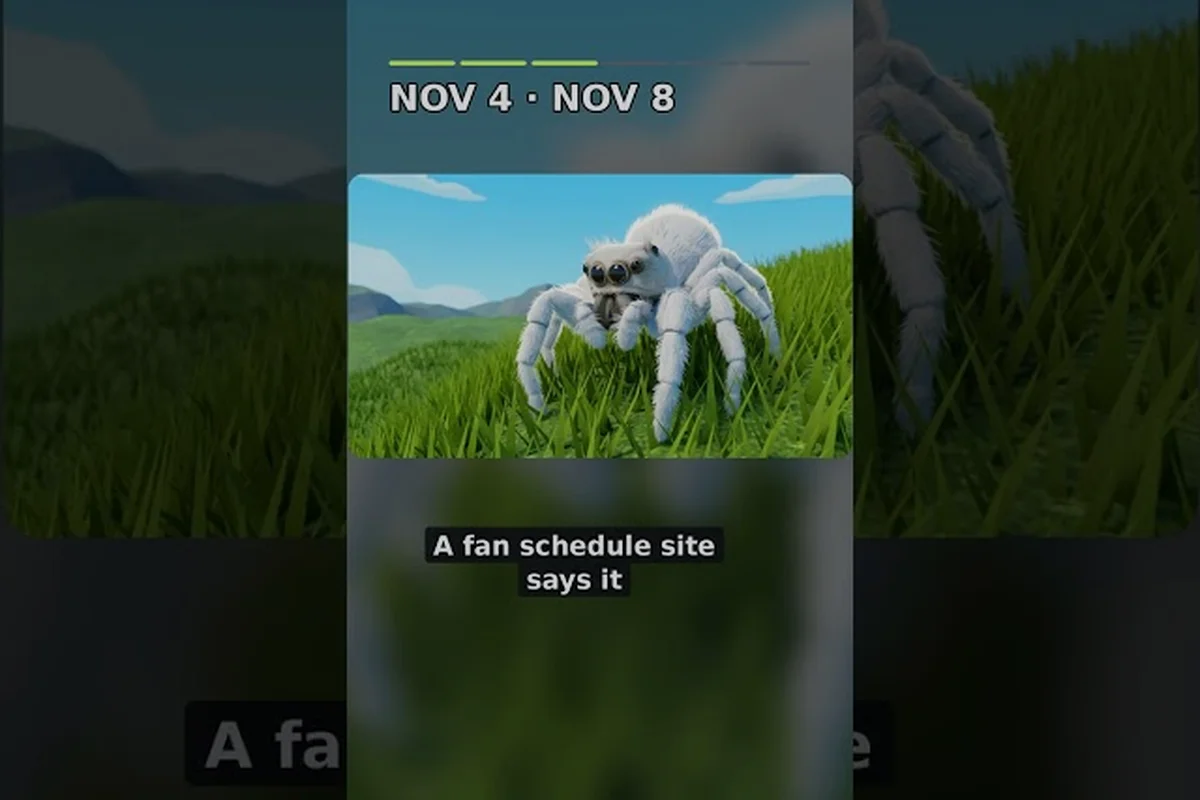
Bug Evolution is a new 2026 Roblox release from the Corgi Crew group, and its most reliable feature roadmap sits in the official Events tab rather than a public changelog. The store listing was last updated on October 29, while three November teasers point toward an enemy, a boss, and a new map. That combination matters because players can see the direction of the game without mistaking community predictions for confirmed updates.
The current game loop centers on hatching as a tiny spider, eating scattered food, growing through the Bug Tree, and collecting more than 30 insect forms. Five visible stat bars—Speed, Health, Bite Damage, Bite Speed, and Stamina—sit alongside a gold counter, level indicator, insect name, Bugs collection, and premium Spiders menu. The first content additions are therefore likely to affect both exploration and combat.
| Confirmed area | Current information | What players can reasonably expect |
|---|---|---|
| Giant Mosquito | New enemy scheduled for November 5 | More immediate pressure while gathering food |
| Desert Sand Worm | New boss scheduled for November 9 | A boss encounter in a desert environment |
| Underground Cave | New map scheduled for November 19 | Expanded exploration and additional resources |
| Store listing | Last updated October 29 | The latest publicly visible build milestone |
| Update history | No detailed public changelog | Changes should be tracked from observed releases |
These are teaser-level commitments rather than full patch specifications. The official page does not publish detailed enemy stats, boss rewards, cave resources, or confirmed insect drops, so those details should not be treated as facts. The Bug Evolution update log is the appropriate place to distinguish a newly observed build from a full balance explanation.
What the game currently contains
The core progression remains simple enough for a new player to understand: hatch, eat nearby food, reach the spider stage at level 10, and decide whether to push the Bug Tree or save coins for another evolution node. Buying level 1 Bite Damage early improves combat, but spending every coin too early can leave the player short for evolution. This tension makes balance decisions especially noticeable in a small-server survival game.
A useful baseline before evaluating any update is to record your insect, level, coins, and five core stats after a session. If a later build changes damage, speed, stamina, or food value, those snapshots give you real evidence rather than relying on community impressions. The Bug Evolution Roblox beginner guide also provides the cleanest starting routine for measuring performance.
Bug Evolution Balance Changes: What Is Actually Known
A bug evolution balance update cannot yet be described in precise numerical terms because the developer has not published a detailed public changelog. The official listing confirms a build dated October 29, but it does not identify stat adjustments, economy changes, or patch IDs. The safest conclusion is that bug evolution balance changes are present or under evaluation only when players can verify them through controlled comparisons.
Do not assume that a different enemy difficulty, faster gathering, or a weaker boss automatically represents a nerf. A change can depend on level, insect form, food source, server population, and which player has the corresponding upgrade. Several players may also have tested different parts of the map during the same period. The Bug Evolution what’s new overview is a more reliable place to separate additions from speculative tuning.
Verified information versus community expectation
The distinction matters because Bug Evolution is still a new release. Community data reported more than 3.9 million visits, roughly 20,800 active players, and about 20,645 favorites in an October 30 snapshot. Those figures show rapid interest, but they do not establish how every stat behaves across all 20,645 favorites or which combat setup dominates in normal play.
| Topic | Verification status | Safe interpretation |
|---|---|---|
| October 29 build | Confirmed by the store listing | The latest known public build milestone |
| Five stat bars | Visible in the game interface | Speed, Health, Bite Damage, Bite Speed, and Stamina exist |
| New enemy, boss, and map | Confirmed through the Events tab | November additions are scheduled |
| Exact buff or nerf values | Not published | Do not cite invented percentages |
| New insect associated with each event | Not yet confirmed | Possible, but not guaranteed |
| Player-count trends | Time-sensitive snapshot | Useful for activity, not balance proof |
For practical testing, focus on Bite Damage, Bite Speed, and Stamina together. A damage increase that drains stamina faster may not improve sustained combat, while a speed adjustment may matter more when escaping a mosquito or positioning against a boss. Health also becomes clearer when comparing the same insect at the same level rather than comparing an early fly with a late-game tarantula or black widow.
A reliable way to test bug evolution buffs and nerfs
Begin with one insect form, one level, one server size, and one food route. Record the time required to collect ten pieces of food, the number of attacks needed to defeat a comparable target, and whether stamina runs out before the target dies. Repeat after any build that the community identifies as important. Because servers list around 15 players, conditions will still vary, but a controlled sample is more valuable than a single victory or defeat.
Do not use Robux purchases as the sole comparison point. The premium Spiders tab can introduce different forms or rewards, so separate free progression from paid content when judging whether a change improves the normal loop. Likewise, compare stage timing rather than only final size: a faster route to the spider stage may indicate a meaningful economy change even if the ultimate evolution cost has not moved.
Bug Evolution Buffs and Nerfs: Effects Players Should Monitor
The most useful bug evolution buffs and nerfs will be the ones that alter the relationship between gathering, evolution, and danger. Early food collection determines whether a player can afford the Bug Tree, and stronger combat determines whether that player survives long enough to use those coins. A seemingly minor stat adjustment can therefore affect the entire progression loop.
Community experience suggests that players often focus on visible speed or damage changes while overlooking stamina management. That is a mistake because each bite can compete with movement. The HUD exposes all five stats, which gives players a direct way to compare builds. The issue is not a lack of information in the interface; it is the lack of official numerical patch notes behind it.
Priority stats and their practical consequences
| Stat | What players may notice | Practical question to test |
|---|---|---|
| Speed | Faster travel or quicker escapes | Does it reduce food-search time enough to offset a damage change? |
| Health | More forgiving encounters | Can you survive repeated attacks without relying on early evolution? |
| Bite Damage | Faster enemy removal | Does higher damage accelerate progression or mainly improve PvE? |
| Bite Speed | More frequent strikes | Does it drain stamina sooner or interrupt movement? |
| Stamina | Longer activity window | Does the effect persist while eating, climbing, or evading? |
Treat any exact numbers as version-specific until they appear in an official note or can be reproduced in-game. A community-reported value may be accurate for one date, server, or insect level. The robust conclusion is the direction of the effect: did the player spend fewer resources, arrive at the next stage sooner, and survive more encounters with the same setup?
Change scenarios and likely player impact
A buff to food value would accelerate coins and potentially shorten the early game, while a nerf to food drops could make careful routing more valuable. Faster insect movement could improve escape routes across the expanding map, yet its benefit would be smaller if stamina consumption also increased. A boss with more health is not automatically more threatening if its attack pattern is slower or its arena offers safer recovery space.
For the announced sand worm, the relevant unknowns are more important than invented numbers. Players need to learn its reach, attack timing, target priority, and the value of surviving. For the cave, they should test whether darkness, narrower paths, or clustered food changes travel efficiency. These are practical questions that can be answered after release without relying on unsupported balance claims.
Bug Evolution Special Events: November Enemy, Boss, and Map Dates
The official Events tab provides the strongest available answer to bug evolution event dates. It lists a Giant Mosquito on November 5, a Desert Sand Worm on November 9, and an Underground Cave on November 19. These dates create a clear content sequence: an enemy first, a boss second, and a larger exploration space third. Dates can still shift, so players should treat the calendar as a schedule rather than a guaranteed minute-by-minute launch time.
| Date | Announced feature | Likely gameplay focus | Confidence |
|---|---|---|---|
| November 5 | Giant Mosquito | Early enemy pressure and food-gathering risk | Confirmed event listing |
| November 9 | Desert Sand Worm | Boss preparation and desert combat | Confirmed event listing |
| November 19 | Underground Cave | New routes, resources, and exploration | Confirmed event listing |
The ordering is strategically useful. The mosquito can serve as a preview of new threats before the boss arrives, while the cave can expand the world after players have had time to prepare for stronger enemies. It is reasonable to expect the content wave to introduce at least one insect form, but that expectation is not confirmed and should remain labeled as such.
Stocking Up for the Mosquito Event
Players who normally gather food in open grass should identify escape routes before November 5. The key test is whether the mosquito pressures movement, bites, or simply competes for the same food. Because mosquito behavior and stat values have not been published, an exact strategy would be premature.
Use the standard opening route: hatch, collect the closest food, reach the spider stage at level 10, and purchase Bite Damage level 1 when affordable. Then avoid committing every coin to the Bug Tree. That sequence creates both a combat option and an economic reserve, which is valuable when an aggressive enemy appears near food sources.
Sand Worm and Cave Prep
A desert boss encounter requires different priorities from ordinary food hunting. Save a strong insect form, monitor stamina, and learn whether movement or sustained biting is more effective once the fight is live. The cave adds a separate test: check whether your routefinding and stamina reserves are adequate when paths are confined or the route is longer.
The Bug Evolution upcoming events guide can serve as the central calendar for these releases. Because the game currently lacks a full official changelog, maintain one note per event with its actual launch date, new enemy behavior, boss rewards, and cave resources. That record becomes more useful than repeated community speculation.
Bug Evolution New Content: How the Features Fit Together
The clearest bug evolution new features are ecosystem-based. The game is moving from a grassy starter area toward a larger collection of biomes, enemies, and challenges. That direction fits the existing progression model: a player starts as a tiny spider, gathers enough food to grow, climbs the Bug Tree, and reaches a stronger insect form before moving into more demanding content.
| Expansion layer | Current foundation | Announced direction |
|---|---|---|
| Bestiary | Insects across more than 30 collectible forms | A Giant Mosquito enemy |
| Boss encounters | Survival and evolution battles | A Desert Sand Worm boss |
| World | Grassy open map with scattered food | An Underground Cave map |
| Progression | Coins, levels, five stats, and Bug Tree nodes | More routes and resource sources |
| Menus | Bugs collection and premium Spiders tab | Possible roster or store additions, unconfirmed |
The desert sand worm description implies more than a single boss. It introduces a desert setting, while the cave represents another biome. These additions could diversify resource availability, shorten travel between targets, or require more careful route planning. Each outcome is plausible, but none should be presented as confirmed until players can inspect the released content.
What to record when each update arrives
Start a simple update log after every release. Record the insect used, level, coins at spawn and at level 10, food collection rate, and the time required to defeat the event target. Add screenshots or short clips only if you want visual evidence; the numerical record is more useful for balance comparisons. Community reports can supplement testing, but they should be labeled as reports rather than universal rules.
Also note whether the event appears only during a limited window or remains permanently in the world. The word “event” can describe both a timed appearance and content permanently added afterward. The current listing confirms dates and subjects but does not resolve that distinction. Likewise, check whether rewards are one-time, repeatable, or tied to defeating the target before spending Robux on uncertain assumptions.
What Bug Evolution Players Should Monitor Next
The Bug Evolution update schedule is useful for tracking future announcements, but confirmed observations should always outrank predictions. The game’s official promise of fresh insects with updates suggests an active content cadence. Still, there is no confirmed website, public social feed, detailed version history, or official Discord listed in the available research. Until those channels exist, the store Events tab is the most authoritative public planning tool.
A sensible monitoring checklist includes the following:
-
Check the Events tab for schedule changes around November 5, November 9, and November 19.
-
Record actual launch dates instead of relying on teaser dates after content ships.
-
Compare Bite Damage, Bite Speed, and Stamina together when testing any bug evolution balance update.
-
Track coins and food value during the first ten levels, where small economy changes have the greatest effect.
-
Separate confirmed features from predictions about new insects, rewards, difficulty, and exact stat values.
-
Watch the Bug Tree and premium Spiders menu for roster or economy changes that could alter progression priorities.
The game’s present strength is a straightforward loop paired with visible growth choices; its next challenge is supporting that loop with deeper biomes and stronger opposition. The November calendar suggests that developers are building outward rather than merely adding isolated cosmetics. The most useful takeaway is to treat the confirmed event dates as a preparation window, measure balance changes with consistent tests, and avoid turning community guesses into hard facts.
Frequently Asked Questions
What are the confirmed Bug Evolution event dates?
The official Events tab lists a Giant Mosquito for November 5, a Desert Sand Worm for November 9, and an Underground Cave for November 19. These are the strongest publicly announced dates, although launch timing can move as development progresses. Each addition focuses on a different layer of play: an enemy, a boss, or an explorable map.
Have developers published the Bug Evolution balance changes?
No detailed numerical balance changelog is publicly available. The store listing confirms a build updated on October 29, but it does not provide specific buff or nerf percentages. Players can still track changes by recording the same insect, level, food route, combat target, and five core stats before and after a significant build.
Should players save coins or push the Bug Tree early?
A balanced approach is usually strongest: collect nearby food, reach the spider stage at level 10, buy Bite Damage level 1 when affordable, and preserve enough coins for your next evolution node. Saving everything can make early combat harder, while spending everything can delay the Bug Tree. Adjust the priority after the announced enemy and boss events are available for testing.
Will the November events add new insect forms?
The store messaging suggests that new insects arrive with updates, so a new form is a reasonable expectation. However, the event listings only confirm the Giant Mosquito, Desert Sand Worm, and Underground Cave. Until the content ships and the roster is visible, players should avoid treating a specific insect drop or reward as guaranteed.
Can Bug Evolution balance updates change the best starter insect?
They may, because changes to damage, speed, health, stamina, food value, or early costs can affect how quickly each form progresses. A reliable comparison requires the same level, server conditions, food route, and target. Record your usual opening stats, then repeat the test after meaningful updates instead of selecting a new insect from a single early-game result.